Cotton Seed Cake in Cattle Feed (Binola Khal)
By Parv Badjatiya · Published Mon May 18 2026 00:00:00 GMT+0000 (Coordinated Universal Time) · Updated Mon May 18 2026 00:00:00 GMT+0000 (Coordinated Universal Time)
What is cotton seed cake?
Cotton seed cake — known across India simply as binola khal — is the protein-rich, oil-bearing residue left over after pressing cotton seeds to extract cottonseed oil. It is one of the oldest traditional cattle feeds in India, fed directly by farmers for decades before modern compound feeds existed. Even today, the bulk of India's cottonseed crop (after lint) ends up as binola khal — used either directly by smallholder dairies or as a key input into manufactured compound cattle feed.
For dairy cattle, buffalo, sheep, and goats, binola khal serves two roles at once: it supplies digestible protein (typically 18–24% on a dry-matter basis) AND meaningful dietary fat (8–14%). That dual contribution is what made it the default farm-mixed-ration ingredient in cotton-growing belts long before soybean meal became widely available. The current India market price for cotton seed cake is tracked daily on our cotton seed cake price page.
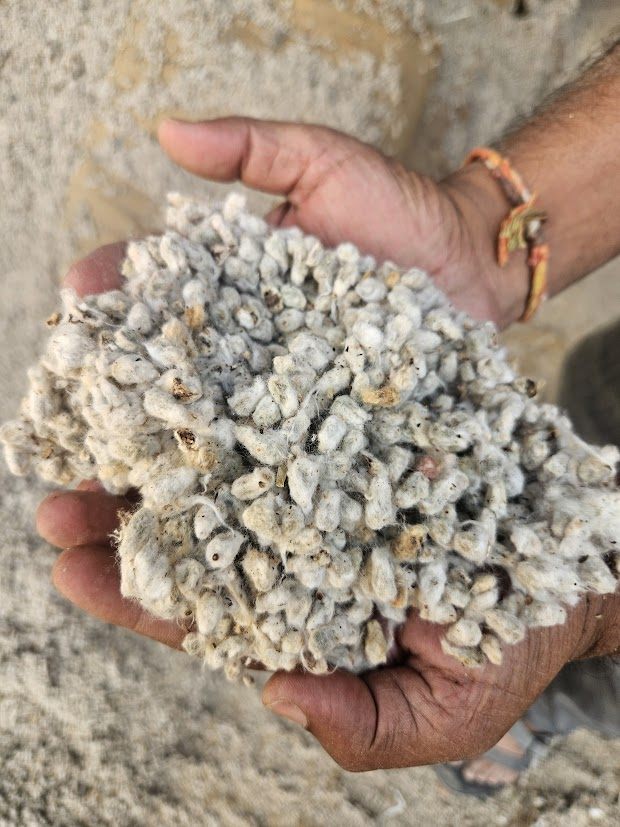 Whole cotton seed (binola beej) in hand — the raw input that mills crush to extract cottonseed oil. What is left behind, after pressing, is the binola khal discussed in this article. Original photograph.
Premium grade vs commodity grade
Cotton seed cake is not a single uniform product. Quality varies sharply by:
- Whether the seed was decorticated (hulls removed) or whole-pressed
- Pressing technology (expeller, screw press, or solvent extraction)
- Region and mill discipline (Maharashtra, Gujarat, Telangana, Andhra Pradesh, Punjab, Haryana, and Madhya Pradesh all produce binola khal with somewhat different specs)
Two commonly traded grades:
| Grade | Crude protein | Crude fat | Notes |
|---|---|---|---|
| Premium quality (expeller, decorticated) | 22% | 12–14% | Higher protein and the highest fat content of any common Indian oilseed cake. Preferred for lactating buffalo and high-yielding dairy cows. |
| Commodity quality (whole-pressed, mixed) | 18–20% | 8–10% | The widely available grade in Indian wholesale markets. Adequate for general feeding. |
Premium-grade binola khal at 22% protein and 12–14% fat is one of the most nutrient-dense traditional ingredients available to Indian dairies — particularly valuable for lactating buffalo where the 5–7% dietary fat target is hard to reach with cereals and lower-fat protein ingredients alone.
Thin vs thick cakes — what the shape tells you
A small but practical observation: binola khal arrives at feed mills and farms in two distinct physical forms — thin cakes (lighter, more brittle discs, usually 3–6 mm thick) and thick cakes (denser, harder discs, often 12–20 mm thick).
What the shape actually reflects:
- Pressing pressure. Older expeller plants and smaller mills produce thinner cakes because the press cycle is shorter and the pressure is lower. Modern high-tonnage mills produce denser, thicker cakes.
- Oil left behind. Thicker, fully-pressed cakes often have slightly LESS oil remaining (and therefore slightly less fat in the cake). Thinner, less-pressed cakes can have higher residual oil.
- Regional habit. Different cotton-growing belts have developed preferences over time. Maharashtra and Gujarat mills often produce one style; Telangana and Andhra Pradesh another.
Practical bottom line: the shape itself doesn't dictate quality. What matters is the protein, fat, moisture, and gossypol numbers on the Certificate of Analysis. Don't pay more for one shape vs the other unless the CoA shows real differences. (Gossypol is the anti-nutritional factor that defines how much cotton seed cake an animal can safely eat — covered in detail in the section below.)
The gossypol question
Cotton seed cake contains gossypol — a yellow polyphenolic pigment naturally produced by cotton plants as a pest defence. Two forms matter:
- Free gossypol — biologically active; toxic to monogastrics (poultry, pigs) at modest doses; less harmful to ruminants
- Bound gossypol — chemically attached to seed proteins during heat processing; largely inert
Why this is fine for cattle, buffalo, sheep, and goats:
Adult ruminants harbour rumen microbes that detoxify free gossypol before it reaches the bloodstream. At normal inclusion levels (15–25% of the concentrate mix), gossypol is not a problem. The standard hard ceiling is around 50% of concentrate even for ruminants — beyond that, gossypol load can overwhelm rumen detoxification, leading to reduced reproductive performance and (in extreme cases) cardiac toxicity.
Watch for:
- Young calves under 3 months — rumen is not fully developed; limit to under 10% of concentrate
- Breeding bulls — gossypol can affect sperm production; keep inclusion under 15%
- Monogastrics (broilers, layers, pigs, dogs, horses) — much stricter limits or avoid entirely
For routine adult dairy and lactating buffalo rations, gossypol is a manageable factor and not a reason to avoid binola khal.
Nutritional profile summary
| Parameter | Premium grade | Commodity grade |
|---|---|---|
| Dry matter | 90–92% | 88–90% |
| Crude protein | 22% | 18–20% |
| Crude fat | 12–14% | 8–10% |
| Crude fibre | 14–20% (undecorticated) / 8–12% (decorticated) | 18–25% |
| TDN (Total Digestible Nutrients) | 70–75% | 65–70% |
| Calcium | 0.15% | 0.15% |
| Phosphorus | 0.55% | 0.55% |
| Free gossypol | 0.02–0.05% (200–500 ppm) | 0.05–0.10% (500–1000 ppm) |
To compute the total DCP and TDN of any ration including cotton seed cake, use our DCP and TDN calculator.
Inclusion rates by animal and life stage
| Animal / stage | Cotton seed cake in concentrate mix | Notes |
|---|---|---|
| Lactating cow | 15–25% | Excellent fat + protein contributor; pairs well with soybean meal |
| Lactating buffalo | 20–30% | Higher fat content directly supports buffalo milk fat target (5–7% of DM) |
| Calf starter (over 6 months) | 10–15% | Limit to 5–10% for calves under 3 months |
| Heifers | 10–20% | Good growth ration ingredient |
| Dry cow / dry buffalo | 10–15% | Maintenance level; excess wastes the protein |
| Adult sheep / goat | 10–20% | Standard inclusion; well-tolerated |
| Breeding bull | 5–15% | Lower limit to protect fertility (gossypol consideration) |
The 20–30% inclusion for lactating buffalo is meaningfully higher than for cows, because the extra fat content directly supports buffalo milk fat. Cotton seed cake is often the single largest individual ingredient in a lactating buffalo concentrate mix in cotton-growing regions of India.
Where binola khal fits in the Indian feed supply chain
Cotton seed cake's role in Indian dairy is changing — but it isn't disappearing.
Traditional model (still common in cotton-belt smallholders)
- Farmer buys 50 kg bags of binola khal direct from a local oil mill or trader
- Mixes manually with maize, wheat bran, mineral mixture, and salt
- Feeds the homemade concentrate alongside green and dry fodder
Modern model (urbanising dairies and feed mill demand)
- Feed mill buys binola khal in bulk from oil mills
- Combines with maize, DORB, wheat bran, soybean meal, mineral premix, and additives
- Produces compound cattle feed sold as mash (ground meal form), pellets (extruded), or dal-style (with lentils, molasses, and pellets blended) products
- Farmer buys the finished compound feed in 50 kg bags
This is the shift the industry is going through: straight binola khal at the farm gate is being slowly replaced by compound feed at the farm gate. But binola khal itself is not declining — it's just moving up the value chain into the compound feed plant. Indian compound feed manufacturers remain among the largest single buyers of binola khal.
Mash, pellets, and dal-style feed: what binola khal becomes
Most modern Indian compound feeds use binola khal as a major protein input. The three common product formats:
| Product format | Description | Typical binola khal inclusion |
|---|---|---|
| Mash | Coarsely ground mixture of cakes, brans, grains, mineral mix, fed loose | 15–25% |
| Pellets | Same ingredients extruded into 6–10 mm pellets; less wastage, easier to handle | 15–25% |
| Dal-style / premium mash | Blend of cakes + cereal grains + molasses + small lentils (dal) for palatability | 20–30% |
Dal-style premium mash is a regional Indian innovation — adding broken lentils and molasses to a standard mash improves palatability for high-yielding animals that get bored of plain mash. Binola khal is usually the largest single ingredient in these blends.
Quality standards: what to check before buying
A reputable Certificate of Analysis (CoA) for cotton seed cake should reference the same BIS animal-feed test methods used for other oilseed cakes (IS:7874). Reasonable specifications for a premium-grade lot:
| Parameter | Premium standard | Commodity standard |
|---|---|---|
| Crude protein (min) | 22.0% | 18.0% |
| Crude fat (min) | 10.0% | 7.0% |
| Crude fibre (max) | 18.0% | 25.0% |
| Moisture (max) | 10.0% | 11.0% |
| Total ash (max) | 7.0% | 8.0% |
| Sand & silica (max) | 1.5% | 2.0% |
| Free gossypol (max) | 500 ppm | 1000 ppm |
| Aflatoxin B1 (max) | 20 ppb | 20 ppb |
Visual + smell checks before accepting delivery:
- Cake colour: light to medium brown, uniformly distributed. Black patches = mould or heat damage = reject
- Smell: faintly nutty, oil-like. Sour, rancid, or fermented smells = reject
- Moisture feel: dry, crumbles cleanly when broken. Soft, damp, or sticky = reject
- Foreign matter: should be minimal. Loose cotton lint or visible stones reduce value
- Particle size of broken cake: chunky pieces interspersed with fines is normal; all-dust suggests over-grinding or low quality
Price dynamics: why binola khal moves daily
Cotton seed cake prices in Indian wholesale markets typically fluctuate ₹50–100 per quintal day-to-day, sometimes more. The drivers:
- Cotton crop arrivals. Oct–Jan is peak arrival season; supply tightens through to the next harvest. Prices generally rise from March onwards as stocks deplete.
- Cottonseed oil price. Cake is the by-product when mills crush seed for oil. When cottonseed oil prices rise, mills crush more, cake supply rises, cake price softens (and vice versa).
- Compound feed mill demand. Large feed mill buying programs can move daily prices. Bulk demand from one major player tightens supply.
- Export demand. South-East Asia (Vietnam, Bangladesh) imports Indian cotton seed cake; export-favourable rupee or buyer surge tightens domestic supply.
- Substitution from other cakes. When groundnut cake or mustard cake is unusually cheap, formulators shift away from binola khal, and prices respond.
Track the daily price on the cotton seed cake price page to time bulk purchases.
Where cotton seed cake is produced in India
| State | Role |
|---|---|
| Maharashtra | India's largest cotton producer; major binola khal production around Vidarbha and Marathwada |
| Gujarat | Second-largest cotton state; high-quality cake from Saurashtra and Kutch oil mills |
| Telangana & Andhra Pradesh | Large producers; combined output rivals Maharashtra |
| Madhya Pradesh | Western MP cotton belt feeds local oil mills |
| Punjab & Haryana | Bt cotton belt; cake supply mainly to north Indian dairies |
| Karnataka & Tamil Nadu | Smaller but locally important supply for south Indian dairies |
For buyers outside cotton-growing states, expect 2–7 days of truck transit time and meaningful freight cost. Buying from the nearest producing state usually wins on landed price.
Common quality issues to watch for
- Adulteration with mineral fillers (sand, soil, ash) to bulk up weight. Check ash and sand & silica numbers
- Excess moisture from undried cake, which invites mould and aflatoxin in storage
- Heat damage from over-pressing, recognisable as dark or burned-looking cake — reduces protein digestibility
- Aflatoxin contamination in lots stored through Indian monsoon humidity (less common than in groundnut cake but still possible)
- High free gossypol from poorly heat-treated cake, which raises monogastric risk if the cake is being resold for poultry use
Storage best practices
Store binola khal like any oilseed cake: dry, ventilated, off the floor, FIFO rotation, no stacking above 12–15 bags. The fat content makes binola khal slightly more rancidity-prone than soybean meal — try not to hold large stocks more than 2 months. Monsoon humidity above 70% RH is the main risk; under those conditions, plan to consume stock within 4–6 weeks.
Conclusion
Cotton seed cake — binola khal — remains one of the most nutritionally valuable traditional ingredients in Indian cattle feed. Its combination of 22% protein and 12–14% fat (in premium grade) is unmatched among common oilseed cakes, making it particularly suited to lactating buffalo rations where extra fat is essential. Ruminants tolerate its gossypol well at standard inclusion rates of 15–30% of the concentrate mix.
The market is shifting — direct farm-gate sales are slowly giving way to compound feed mills as the dominant buyers. But the underlying commodity is not declining; it is simply moving up the supply chain. For Indian dairy operations in cotton-growing regions, sourcing good-quality binola khal at the right price remains one of the highest-ROI decisions a feed buyer can make.
Frequently asked questions
What is binola khal?+
What is the protein and fat content of premium cotton seed cake?+
Is cotton seed cake safe for cattle despite gossypol?+
Why does cotton seed cake come in two shapes (thin and thick)?+
Is cotton seed cake being replaced by compound feed in India?+
Why do cotton seed cake prices fluctuate daily?+
Related articles
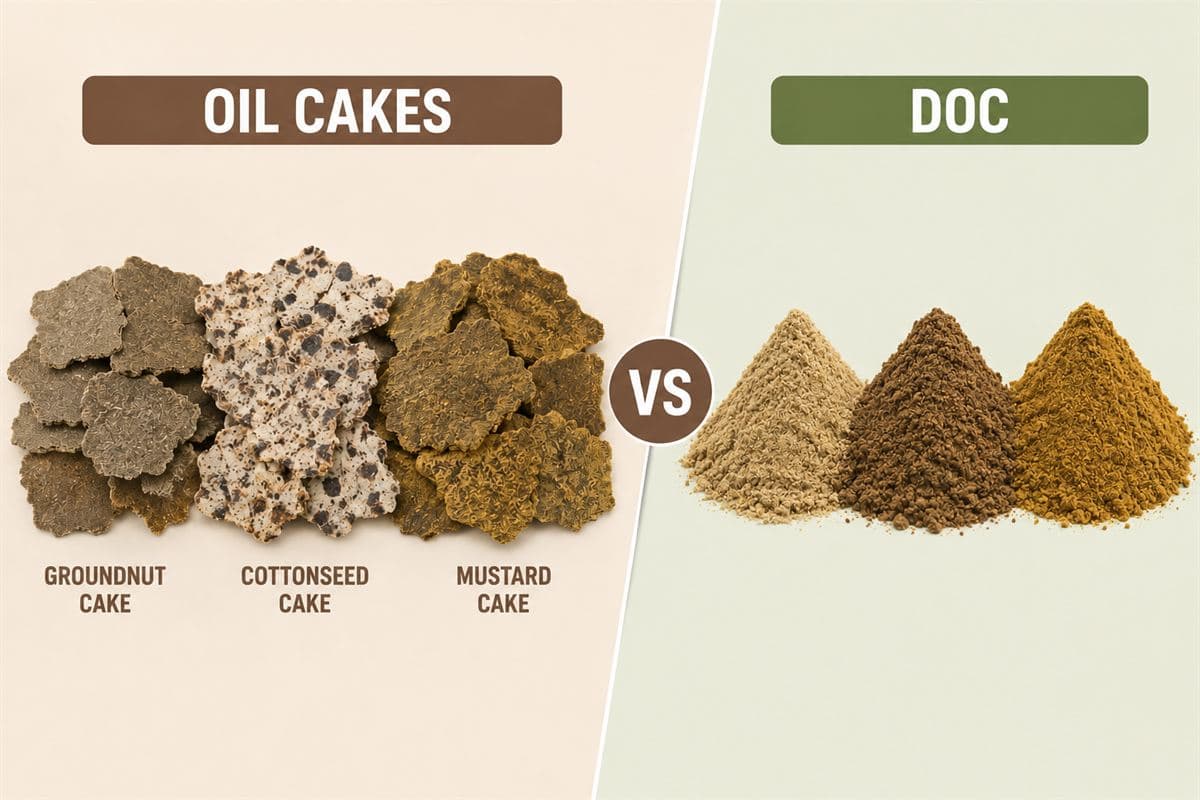
Oilseed Cake vs DOC (De-Oiled Cake / Meal) — Cottonseed, Groundnut & Mustard
Cake vs DOC (de-oiled cake/meal) in Indian cattle feed — cottonseed, groundnut, mustard. Protein, fat, price per protein, and when to use which.
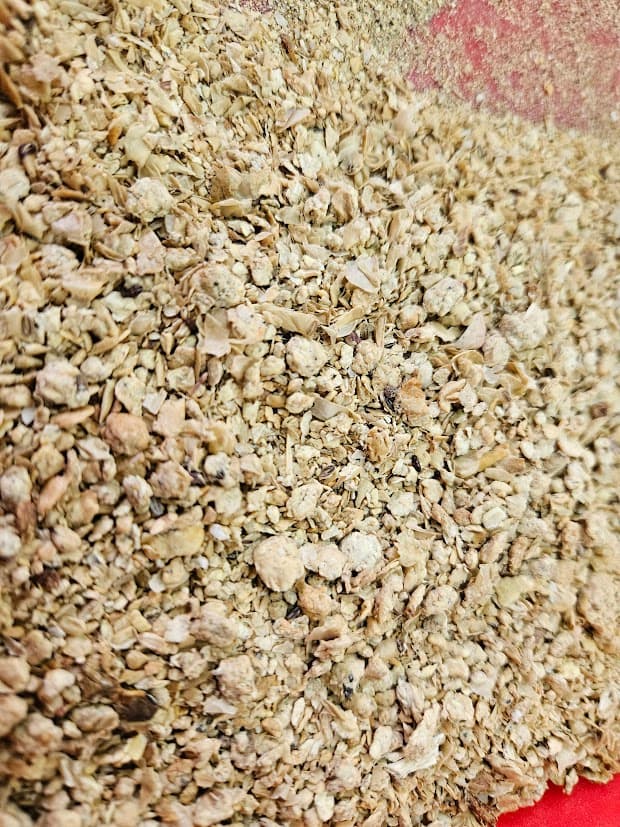
Soybean Meal in Cattle Feed
Complete guide to soybean meal in Indian cattle feed — three grades (45/48/50% protein), BIS standards, inclusion rates for cow, buffalo, sheep, and goat.
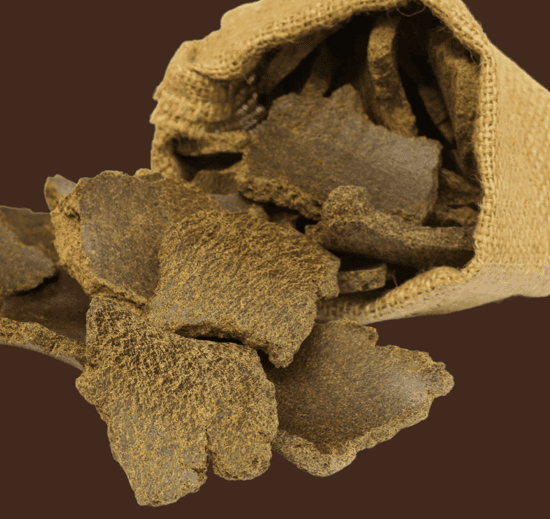
Mustard Cake (Sarson Khal) in Cattle Feed
Mustard cake (sarson khal) in Indian cattle feed — 28-32% protein, expeller vs solvent-extracted, glucosinolate limits, and Rajasthan sourcing.