Compound Feed
Compound cattle feed in India — BIS IS:2052 Type-1 and Type-2 grades, pelleting, formulation, manufacturing, and what to look for on the bag label.
Compound cattle feed is a scientifically balanced mixture of grains, oilseed cakes, brans, minerals, and additives, formulated to give dairy cattle a fixed nutrient profile in every bag. Instead of blending five or six raw materials on the farm every day, the farmer feeds a single ready-made concentrate alongside green fodder and dry roughage. This is the most common form of concentrate feeding on organised Indian dairies today.
The Bureau of Indian Standards (BIS) governs compound cattle feed under IS:2052. The standard defines two grades: Type-1 (higher-protein, higher-energy, intended for cows yielding over 15 litres per day and for lactating buffaloes) and Type-2 (lower-cost maintenance feed for dry cows, low-yielders, and growing heifers). A well-run mill will print the BIS type, guaranteed analysis (crude protein, fibre, fat, moisture), the batch number, and the manufacturing date on every bag.
The guides in this section cover how compound feed is manufactured, how pelleting differs from mash, how life-stage feeds are formulated, how to read a bag label, and how to choose the right grade for your herd. If you are new to compound feed, start with the introductory guide and then read the life-stage guide to match feed grade to your animals.
Guides in this section
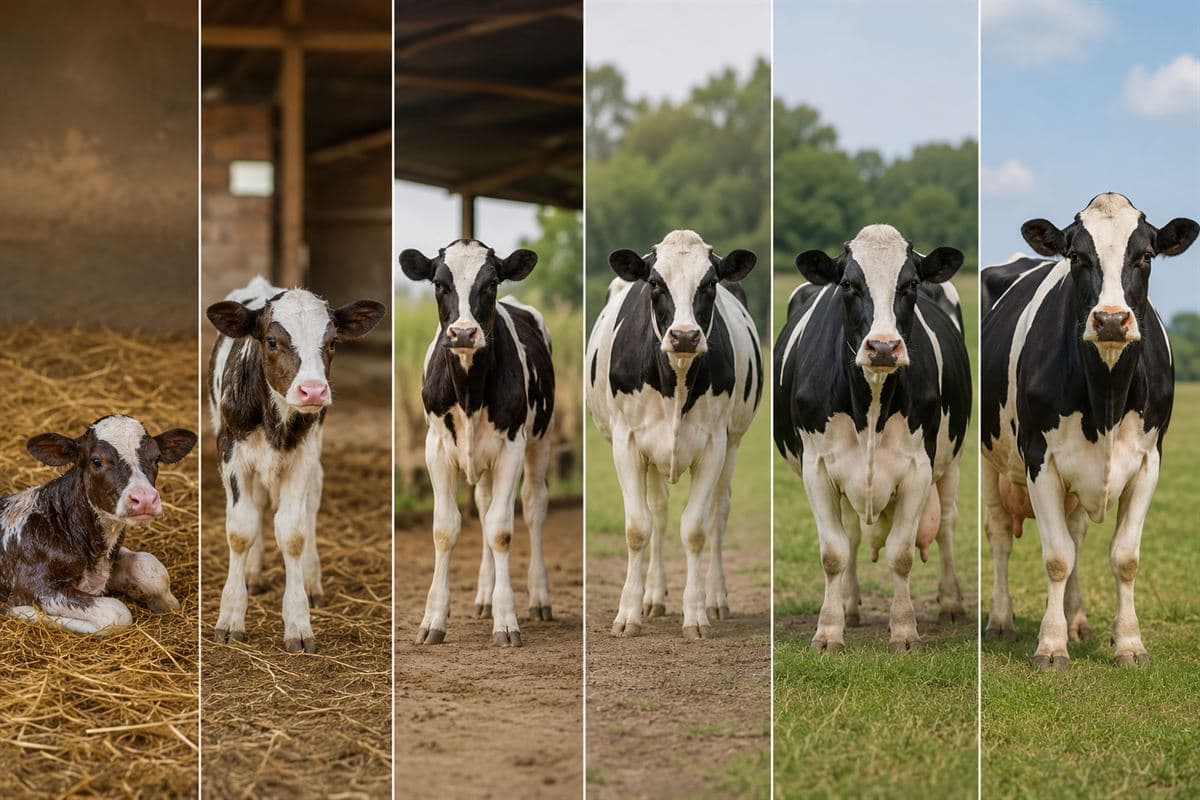
Cattle Feed Stages Explained — Starter, Grower, Heifer, Pregnancy, Close-Up & Transition
Stage-by-stage guide to compound cattle feed in India — starter, grower, heifer, pregnancy, close-up & transition pellets (BIS Type-1, no urea, 25 kg).
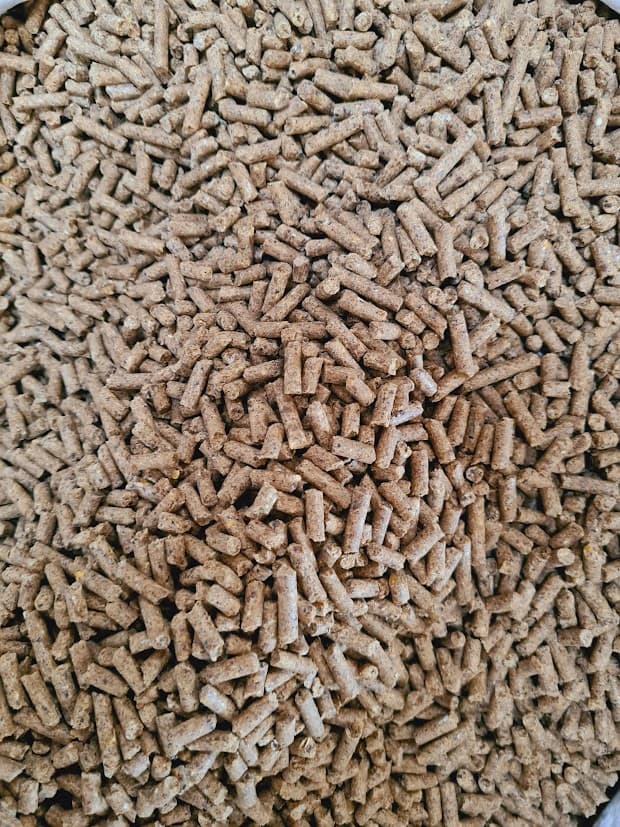
Compound Cattle Feed in India — BIS Type 1 vs Type 2
Compound cattle feed in India — BIS IS:2052 Type 1 vs Type 2 specs, why feed is sold as pellets, the 20% protein labelling rule, and how to choose.
Frequently asked questions
What is compound cattle feed?
Compound cattle feed is a factory-mixed concentrate made from a fixed recipe of grains, oilseed cakes, brans, minerals, and additives. Each bag delivers a guaranteed nutrient profile, which is why organised Indian dairies prefer it over home-mixed concentrates. Compound feed is fed alongside green fodder and dry roughage — it is not a complete diet by itself.
What is the difference between BIS Type-1 and Type-2 cattle feed?
Type-1 has higher crude protein (minimum 22%) and higher total digestible nutrients (TDN, minimum 75%) than Type-2 (minimum 20% CP, 70% TDN). Type-1 is intended for high-yielding cows (over 15 L/day) and lactating buffaloes; Type-2 is a maintenance grade for dry cows, low-yielders, and growing heifers. Type-1 costs about ₹2–3 per kg more than Type-2. Feeding Type-2 to a high-yielder wastes yield potential; feeding Type-1 to a dry cow wastes money.
Should I choose pellet or mash form of compound feed?
Pellets have three advantages: less fines and dust, longer shelf life, and better rumen residence time. Mash is cheaper per kg because it skips the pelleting step, but has more wastage from wind and selective eating. For lactating cows and buffaloes, pellets are the better choice. For dry cows and growing heifers, mash is acceptable if storage and feeding practices are good.
How much compound feed should I give my dairy cow?
A general rule for Indian crossbred cows: 400 grams of Type-1 compound feed per litre of milk produced, plus 1.5 kg for maintenance. So a cow giving 15 L/day gets about 1.5 + 6 = 7.5 kg. Buffaloes need slightly more (500 g per litre) because their milk is richer. Always split into two or three meals and provide alongside adequate green fodder and clean water.