Liquid Molasses in Cattle Feed — Specs, Inclusion Rate, Tenders & Sourcing in India
By Parv Badjatiya · Published Sat Jun 13 2026 00:00:00 GMT+0000 (Coordinated Universal Time) · Updated Sat Jun 13 2026 00:00:00 GMT+0000 (Coordinated Universal Time)
Liquid molasses is one of the most useful — and most quietly regulated — raw materials in Indian cattle feed manufacturing. It binds pellets together, sharpens palatability, adds usable energy, and even contributes a small mineral load. Yet most farmers and even some new feed mill operators do not know that you cannot just walk into a sugar mill and buy molasses in India. The supply chain runs through state-issued permits and government tenders. Here is the full picture — specifications, inclusion rate, regulatory framework, sourcing channels, the 2026 shortage, and what to do when molasses is genuinely unavailable.
What liquid molasses actually is
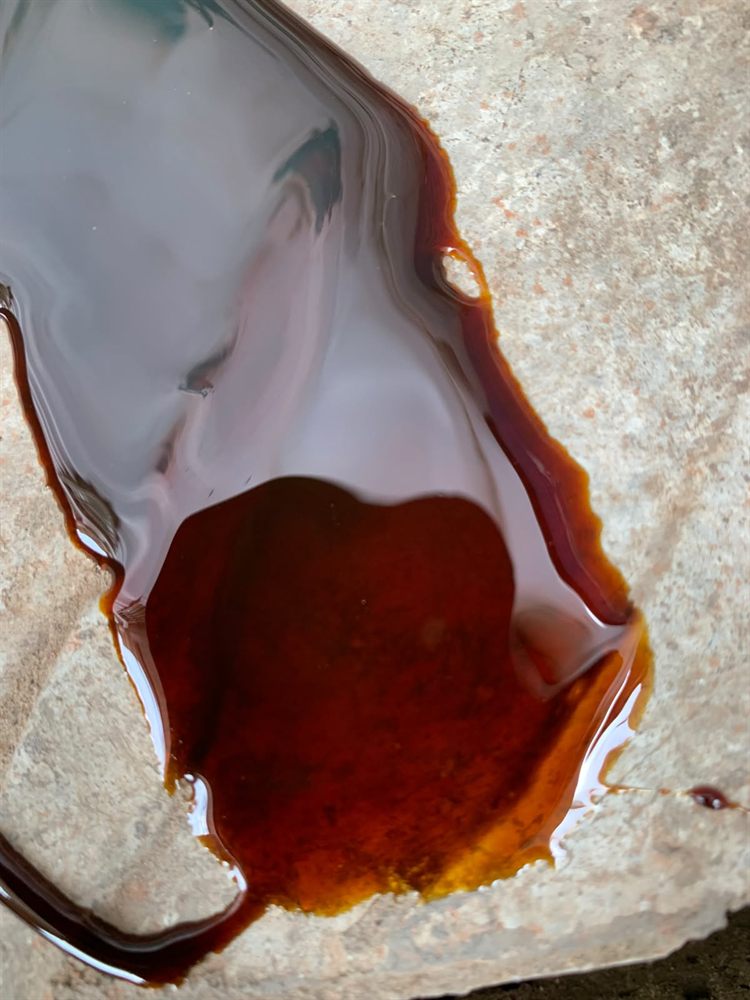
Liquid molasses is the dark, thick, slow-flowing residual syrup left after sugar crystals have been extracted from sugarcane juice. Each tonne of sugarcane crushed at an Indian sugar mill yields roughly 40-45 kg of molasses as a by-product. It is one of the cheapest concentrated energy sources in Indian feed manufacturing — often more competitive per MJ of metabolisable energy than maize — which is why it has become a staple binder in compound feed pellets.
Track the current Indian wholesale price on our daily molasses price page.
Why pellet mills use molasses
Molasses does five jobs in a pellet line at the same time. This is why even cheap substitutes rarely fully replace it:
| Function | What molasses does |
|---|---|
| Pellet binder | The dissolved sugars caramelise under pelleting heat (~80-85°C) and crystallise on cooling, gluing the ground feed particles together into a hard pellet. Binding strength is one of the main quality parameters in BIS Type-1 and Type-2 compound feed. |
| Palatability enhancer | The sweet flavour masks bitter components from cakes and supplements (especially mustard cake and bypass fat). Cows and buffalo will eat more of a molasses-sweetened ration. |
| Energy source | Molasses is roughly 46-48% sugars. Practical energy contribution is 11-12 MJ ME/kg DM, similar to maize. |
| Dust control | The sticky surface binds fine particles, reducing dust and respiratory losses during transport and feeding. |
| Mineral contribution | Contains small but real amounts of potassium, calcium, magnesium, and trace elements. Not enough to replace mineral mixture, but useful as a baseline. |
Inclusion rate — typical and maximum
For Indian compound cattle feed pellets:
| Inclusion | Effect on pellet line |
|---|---|
| 2-5% (typical) | Best balance of binding, palatability, and pellet hardness. Most BIS Type-1 and Type-2 recipes sit in this range. |
| 5-7% (high but workable) | Stronger binding and sweeter feed, but pellets become slightly softer. Moisture content of the finished feed rises by 1-2 percentage points, which can push close to the BIS 11% maximum for compound feed. |
| 7-10% (specialty / starter) | Used in some calf starter feed and "sweet bait" feeds to boost intake. Requires fast turnover — these pellets do not store well in monsoon humidity. |
| Above 10% (avoid for standard pellets) | Pellets become sticky, soft, fail durability tests, mould risk rises sharply. Only used in specialty bait products with very short shelf life. |
The practical sweet spot for most Indian compound feed lines is 3-4% — enough to bind cleanly, enhance palatability, and stay safely under the BIS moisture cap.
Grade A specifications — what to ask for
When you bid in a tender or sign an offtake contract, the specification you should hold suppliers to is Grade A liquid molasses. There are practically two tiers:
- Standard Grade A (BIS minimum) — Brix ≥ 80%, total sugars ≥ 46%
- Premium Grade A (export-quality / large feed mills) — Brix ≥ 84%, total sugars ≥ 48%, moisture ≤ 20%, EU feed-safety compliance
For compound feed pellet mills, premium Grade A is the safer target because Brix volatility in the lower band causes inconsistent pellet hardness from batch to batch.
| Parameter | Premium Grade A spec | Why it matters |
|---|---|---|
| Brix (total dissolved solids) | ≥ 84% (premium tier) | Brix is measured with a refractometer or hydrometer. Below 80%, you are paying for water. Pellet binding strength drops sharply. |
| Total sugars | ≥ 48% | Sucrose + reducing sugars. This is what does the actual binding and provides the energy contribution. |
| Sucrose | ≥ 30% | The crystalline sugar fraction. Drives caramelisation during pelleting. |
| Reducing sugars | ≤ 25% | Mostly glucose and fructose. Above 25% means more fermentation risk in storage. |
| Moisture | ≤ 20% (≤ 22% for BIS minimum) | Anything higher means thinner molasses that flows too fast through injection nozzles and waters down the feed. |
| Ash (mineral residue) | ≤ 12% | High ash means more silica and sand from sugar mill processing. Builds up in injection nozzles and pumps. |
| Total solids | ≥ 70% | Solid matter remaining after moisture removal. Linked to Brix. |
| Crude protein | ≥ 8% (typical 10-14%) | Mostly soluble nitrogen compounds. Bonus contribution but not the headline reason to buy. |
| Fat | ≤ 1.5% | Higher fat raises rancidity risk. |
| pH | 4.5 - 6.5 | Outside this range, sour or alkaline molasses can affect rumen microbe activity. |
| Density / specific gravity | 1.40 - 1.45 at 20°C | Linked to Brix — a quick density check at delivery confirms the load is not watered down. |
| Aflatoxin B1 | ND (≤ 20 ppb) | Indian feed safety limit. Premium suppliers ship with "not detected" results. |
Two field tests every feed mill should run at delivery:
- Brix check with a hand refractometer (₹2,000-5,000 one-time cost). Takes 30 seconds per tanker. If Brix is below 78%, reject the load or renegotiate the rate.
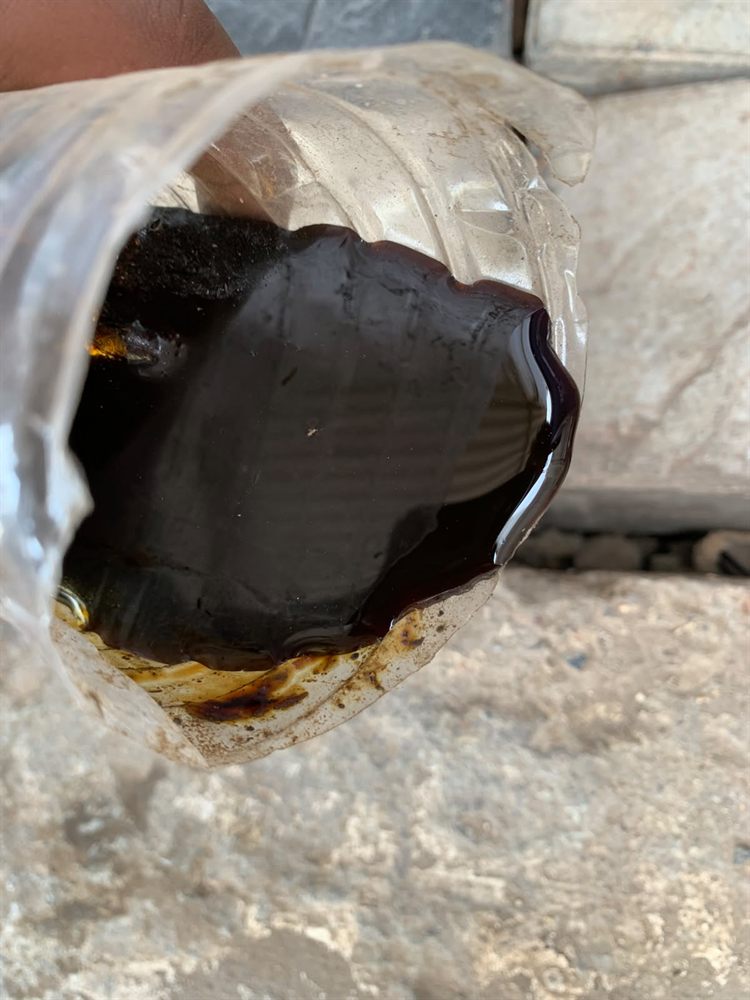
- Visual + smell test. Healthy Grade A molasses is dark brown to near-black, viscous, with a sweet-smoky cane aroma. Acidic vinegar smell or visible fermentation bubbles means the molasses has started to spoil — reject it.
What a real Grade A COA actually shows
Below is the kind of result block you should see on a Certificate of Analysis (COA) from an Indian premium Grade A molasses supplier. This is an anonymised composite from a real Indian supplier COA, useful to set the expectation when you receive paperwork from a new vendor:
| Parameter | Result | Specification |
|---|---|---|
| Brix | 85% | ≥ 84% |
| Moisture | 13.0% | ≤ 20% |
| Total Sugars | 50.0% | ≥ 48% |
| Sucrose | 35.0% | ≥ 30% |
| Reducing Sugars | 18.0% | ≤ 25% |
| Crude Protein | 13.75% | ≥ 8% |
| Fat | 0.97% | ≤ 1.5% |
| Ash | 11.98% | ≤ 12% |
| Total Solids | 78.0% | ≥ 70% |
| pH | 5.5 | 4.5 - 6.5 |
| Calcium | 0.1% | Report only |
| Phosphorus | 0.1% | Report only |
| Aflatoxin B1 | Not Detected | ≤ 20 ppb |
| Heavy Metals | Complies | EU feed limits |
| Pesticide Residues | Complies | EU feed limits |
| Mycotoxins | Complies | EU feed limits |
The COA should also list batch number, production date, expiry date, and EU feed-safety compliance (or your domestic equivalent if the molasses is for purely domestic use). Reject any consignment without a batch number — without it you cannot trace a quality dispute back to a specific production run.
Packaging, storage and shelf life
| Aspect | Typical |
|---|---|
| Form | Liquid (viscous) |
| Container | 250 kg HDPE drums, road tankers (15-22 MT), or rail tankers (45-50 MT) for very large mills |
| Storage | Cool, dry, away from direct sunlight. Avoid prolonged heating above 40°C. |
| Shelf life | 12 months from production under proper storage |
| Container labelling | Batch number, production date, expiry date, Brix, supplier name |
After 12 months, the sugar profile shifts (sucrose inverts, reducing sugars rise), pellet binding strength drops, and fermentation and mould risk grows (which also raises aflatoxin and other mycotoxin exposure in pelleted feed). Always rotate drum stock first-in-first-out and check production dates on every delivery.
The regulatory framework — why molasses isn't a free-market commodity
This is the part that surprises most newcomers to Indian feed manufacturing.
Molasses production and trade is regulated at the state level under each state's Molasses Control Act / Molasses Control Rules. The reason is straightforward: molasses is the primary feedstock for industrial alcohol, ethanol, and country liquor. State excise departments treat it as a controlled substance to prevent diversion to illicit liquor production and to ensure orderly supply to the priority user industries.
In practical terms, this means:
- Sugar mills cannot freely sell their molasses output. They must allocate it to user industries according to the state's priority order.
- The priority order is usually: ethanol-blending plants → industrial alcohol → cattle feed mills → chemical industries.
- Interstate transport of molasses requires a permit issued by the state excise department of both the origin and destination state.
- Possession of large quantities without a permit can attract excise penalties, similar to unauthorised possession of country liquor raw material.
- Each state's rules vary — UP, Maharashtra, Karnataka, and Tamil Nadu (the four largest sugar-producing states) have somewhat different procurement and movement procedures.
So "buying molasses" in India does not look like "buying soybean meal." It looks like applying for an allocation, bidding in a state tender, or signing a long-term offtake under state-permitted volumes.
How cattle feed mills actually procure molasses
Three legitimate channels:
1. State-allocated quota
Most large-state feed mills register with the state excise / sugar department as a "user industry." Each season, the department allocates a percentage of the state's molasses production to registered users based on declared capacity and prior consumption. The feed mill pays the controlled price + transport + excise charges and lifts the allocated quantity from designated sugar mills.
2. Government tender
State-owned sugar mills (and some private mills with surplus beyond their primary allocation) periodically auction molasses through state-tender platforms. Cattle feed mills, distilleries, and chemical industries bid against each other. Winning bidders receive a permit covering the tendered quantity. This is where the competitive bidding gets fierce — when ethanol blending demand is high, feed mills routinely lose tenders to distilleries that can pay more.
3. Long-term private offtake
Some private sugar mills sign long-term offtake agreements with large cattle feed groups, executed within their state-permitted "free sale" quota (the portion left after captive use and state-priority allocations). These contracts give the feed mill price stability but the quantity available is small relative to demand.
What does not work: showing up at a sugar mill with cash and a tanker. The mill cannot legally sell to you without checking your permits.
The 2026 shortage — why molasses is scarce this year
Several states, especially Uttar Pradesh, are seeing a meaningful molasses shortage for cattle feed mills in 2026. The drivers:
- E20 ethanol blending mandate. India's target of 20% ethanol blending in petrol by 2025-26 has dramatically increased the priority allocation of molasses to ethanol plants. Cattle feed mills sit lower in the priority queue.
- Sugar crop variability. Cane production has been mixed in 2025-26 across UP and Maharashtra. Lower cane → lower molasses → less for non-priority users.
- Tender prices have risen. What feed mills won at ₹13-15/kg two years ago is now winning at ₹19-21/kg.
- Some states have reduced "free sale" quotas to ensure ethanol supply, further squeezing feed mill access.
If you operate a feed mill in UP, Maharashtra, or Karnataka, you are likely already feeling this. Smaller mills are hit hardest because they cannot bid effectively against large distilleries in state tenders.
This is part of a broader state-policy squeeze across Indian cattle feed raw materials. The same UP government that controls molasses allocation has just announced an MSP procurement for maize at ₹24/kg, tightening another core input cost for feed mills in the same state. Reading both stories together gives a clearer picture of where 2026 input cost pressure is coming from.
Substitutes when molasses is scarce
When molasses supply is tight, Indian feed mills typically reach for one of two workarounds — soya lecithin or molasses-flavour additives. Each solves a different subset of the five jobs molasses normally does, and neither is a complete one-to-one replacement.
Option 1 — Soya lecithin
Soya lecithin is a phospholipid co-product of soybean oil refining.
What soya lecithin does well:
- Acts as a pellet binder at 0.5-1.5% inclusion (versus 3-5% for molasses)
- Palatability enhancer with a mild oily taste
- Adds usable energy from its phospholipid content
- Does not add moisture (so pellets stay drier)
What soya lecithin does NOT do:
- Does not provide the dust-control benefit that molasses gives via its sticky coating
- Does not contribute the energy equivalent that 4% molasses contributes
- Costs significantly more per kg than molasses (often 5-10× higher per kg)
- Full replacement is uneconomical for standard compound feed; partial substitution is the realistic play
Option 2 — Molasses-flavour additives
Some mills add a molasses flavour concentrate — typically a liquid or powder with caramelised sugar, vanilla notes, and molasses-like aroma — at very small inclusion rates (0.05-0.2% of finished feed). These are the same family of flavour additives used in pet food and livestock concentrates worldwide.
What molasses flavour does well:
- Replicates the sweet smell and taste of real molasses at a fraction of the volume
- Boosts intake when the animal is offered an otherwise bland or bitter feed
- Very cheap per tonne of finished feed (the inclusion rate is tiny)
- Does not raise moisture content — the pellet stays well within BIS moisture limits
- Easy to dose into the mixer line; no special handling equipment needed
What molasses flavour does NOT do:
- No binding contribution at all. Pellets made without real molasses or lecithin still need a binder (lignin sulfonate, gelatinised starch, bentonite clay, or similar) to hold together
- No meaningful energy contribution — the inclusion is too low to matter nutritionally
- No dust control at this dosage
- No mineral contribution
So molasses flavour solves the palatability problem cleanly, but the binding, energy, and dust-control functions of real molasses have to be replaced separately.
Typical mill responses to the 2026 shortage
What we are seeing across UP, Maharashtra, and Karnataka mills navigating the current shortage:
| Scenario | What the mill does |
|---|---|
| Molasses tight but available | Reduce molasses from 4% → 2%, add 0.5-1% soya lecithin to maintain binding |
| Molasses very scarce | 0% molasses + 1.5-2% soya lecithin (for binding + palatability) + 0.1% molasses-flavour additive (for the familiar sweet aroma) |
| Cost-sensitive small mill | 0% molasses + a chemical binder (lignin sulfonate) + 0.1-0.2% molasses-flavour to retain consumer-recognisable smell on bag opening |
Pellet quality stays acceptable in all three scenarios. Costs rise 10-25% versus a normal molasses-included recipe, and the feed mill survives the shortage without losing customers who associate the molasses smell with quality.
Quality check at the receiving dock
A 10-15 minute QC protocol at every molasses tanker delivery:
- Driver's permit + sugar mill source document — confirm the load matches the tender allocation or offtake contract on paper.
- Visual inspection of the tanker hatch — colour, consistency, no fermentation activity.
- Brix with a refractometer on a sample drawn through the hatch. Reject anything below 78%.
- Specific gravity check with a hydrometer — should match the Brix reading roughly.
- Sugar content test in your in-house lab or with a sent-out sample — confirms total sugars at 46% minimum.
- Moisture content by oven-drying method — should be 22% maximum.
- pH test with a calibrated meter or strips.
- Sign and stamp the lifting receipt only after pass. Once stamped, you have accepted the load.
A failed Brix or sugar content check is grounds for either rejecting the load or renegotiating the rate down. Either is acceptable practice in Indian molasses tendering.
What dairy farmers should know
If you are a dairy farmer and you see compound feed bag labels listing "molasses" or "non-cane molasses syrup," you are reading the binder-and-palatability ingredient. A small amount of molasses in your compound feed is normal and useful. It does three things for your cow or buffalo:
- Makes the feed sweeter so the animal eats more (improves intake)
- Adds easily digestible energy for milk production
- Helps the pellets stay intact during handling so there is less powder waste at the feeding trough
You do not need to add separate molasses to your homemade ration unless you are mixing your own feed at scale. If you are mixing your own TMR, adding 100-200 ml of molasses per kg of dry mix improves palatability and dust control significantly.
What we are watching for the rest of 2026
Three signals to track:
- State tender prices for molasses in UP, Maharashtra, Karnataka. If prices push past ₹22/kg, more feed mills will switch to soya lecithin partially.
- Ethanol blending mandates — any expansion beyond E20 will tighten molasses supply further.
- Sugar cane crop in 2026-27 season. A strong crop ahead of the November-March crushing season could relieve pressure into 2027.
We will update this page as the 2026 procurement season concludes.
Related reading
- Daily molasses price (India) — wholesale rate, updated each working day
- Maize in Cattle Feed — Inclusion, Aflatoxin & Acidosis — the other major energy ingredient that molasses competes with on a cost-per-MJ basis
- Mustard Cake (Sarson Khal) in Cattle Feed — one of the bitter cakes that molasses helps mask
- Compound Cattle Feed in India — BIS Type 1 vs Type 2 & Pellets
- Cattle Feed Stages — Starter, Grower, Heifer & Transition
- Aflatoxin in Cattle Feed — BIS 20 ppb Limit & Mycotoxin Binders — relevant for storage and shelf-life management
- Mineral Mixture for Cattle Feed
- Bypass Fat in Cattle Feed — Types, Dosing & ROI
- Total Mixed Ration (TMR) for Dairy Cattle
- News: UP MSP Maize Procurement at ₹24/kg — Cattle Feed Impact — parallel state-policy story affecting feed-mill input costs
Frequently asked questions
What is the maximum inclusion rate of liquid molasses in cattle feed pellets?+
Why is molasses trading restricted in India?+
How do cattle feed mills actually source liquid molasses?+
What is Grade A liquid molasses and why does it matter for pellets?+
Can soya lecithin replace molasses in cattle feed?+
Can molasses flavour additives replace real molasses in pellets?+
Related articles
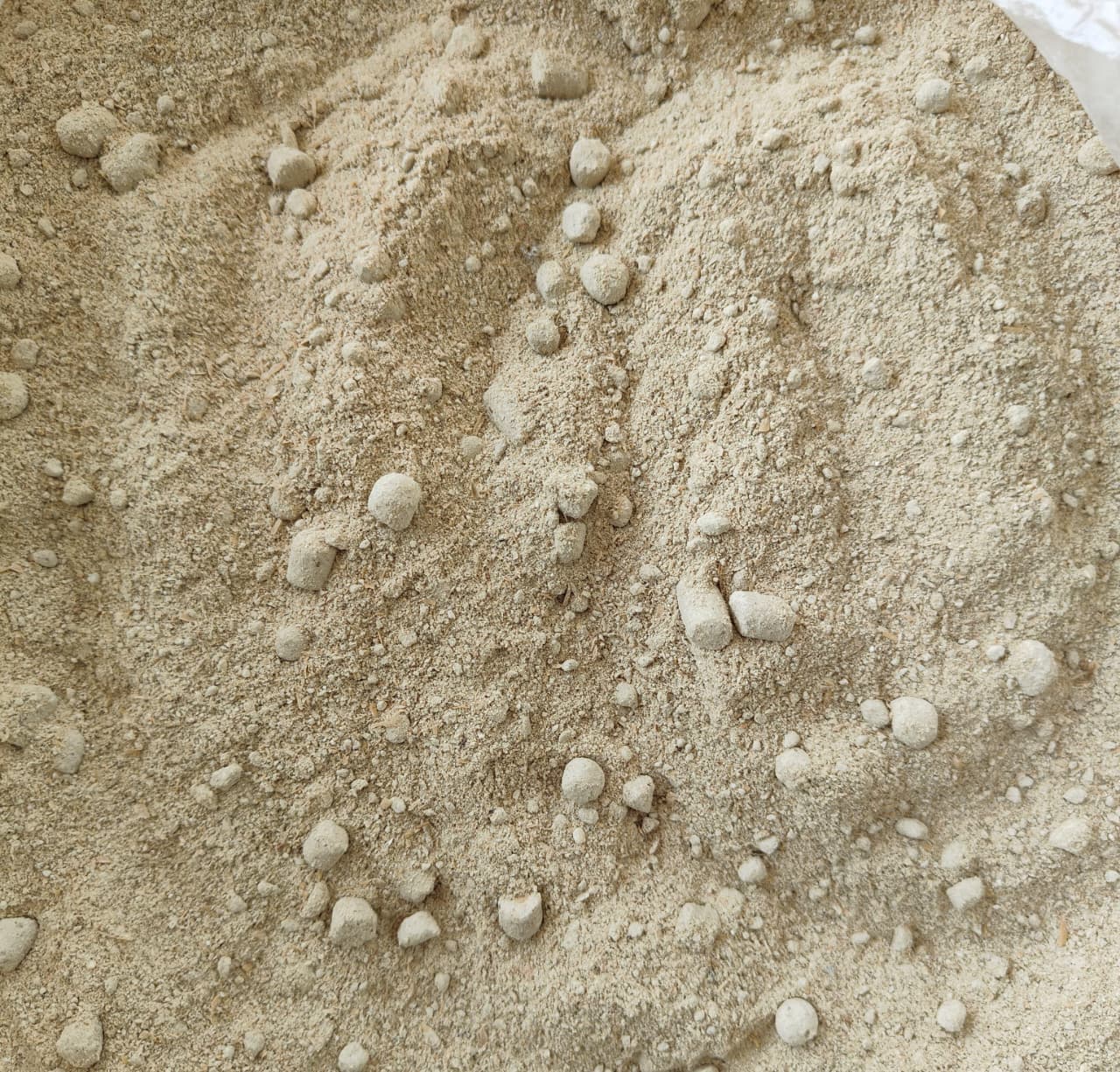
De-Oiled Rice Bran (DORB) in Cattle Feed
DORB in Indian cattle feed — 16-17% CP and 12-14% CF, why it's the main pellet raw material, BIS aflatoxin limit, adulteration tests, and inclusion rates.
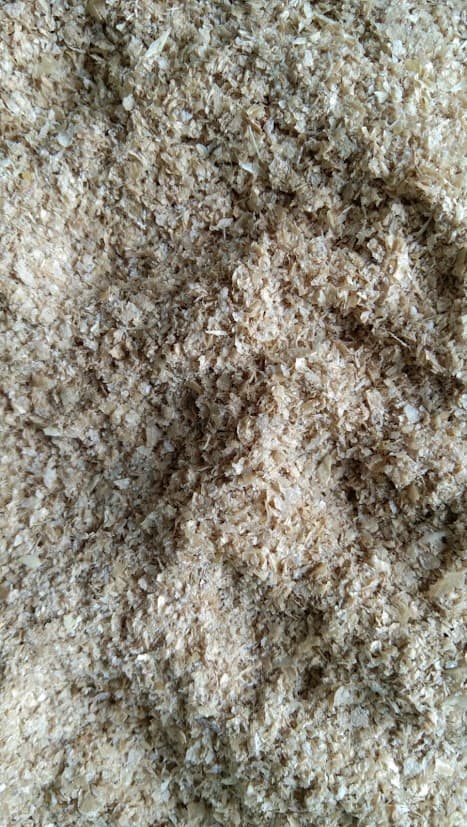
Wheat Bran (Gehu Chokar) in Cattle Feed
Wheat bran (gehu chokar) in Indian cattle feed — fine, super fine, and coarse types, 15% protein, and why DORB is replacing it in compound feed pellets.

Maize DDGS, Rice DDGS and Maize DOC in Cattle Feed
Complete guide to DDGS in Indian cattle feed — Maize DDGS, Rice DDGS, and Maize DOC. Protein and fat specs, colour-quality link, aflatoxin risk, dosing.