Maize DDGS, Rice DDGS and Maize DOC in Cattle Feed
By Parv Badjatiya · Published Mon May 18 2026 00:00:00 GMT+0000 (Coordinated Universal Time) · Updated Mon May 18 2026 00:00:00 GMT+0000 (Coordinated Universal Time)
What is DDGS?
DDGS — Distillers Dried Grains with Solubles — is the dried residue left after ethanol (alcohol) is produced from grain. In a typical ethanol plant:
- Grain (mostly maize or rice in India) is ground and mixed with water
- Yeast is added — it ferments the starch into alcohol and CO₂
- The alcohol is distilled off and used for fuel ethanol, beverages, or industry
- The remaining slurry — protein, fat, fibre, yeast bodies, and soluble fermentation products — is dried into a yellow-brown granular product
- This dried residue is DDGS
For cattle feed mills, DDGS is a valuable ingredient: it concentrates the original grain's protein and fat into a smaller mass, and the leftover yeast adds B-vitamins and palatability. Indian DDGS supply has grown rapidly since 2018 with the Ethanol Blending Programme (EBP), which mandates increased ethanol in petrol.
This article covers the three main DDGS-family products in Indian cattle feed: Maize DDGS (standard), Rice DDGS (higher protein), and Maize DOC (de-oiled). It also explains the critical colour-quality relationship and the aflatoxin risk that makes DDGS the most carefully-managed ingredient in modern compound feed.
The three products compared
| Parameter | Maize DDGS | Rice DDGS | Maize DOC (De-Oiled) |
|---|---|---|---|
| Crude protein | 28–30% | 45% min | 28–30% |
| Crude fat (Oil) | 8–10% | under 1% | under 2% |
| Crude fibre | 4–7% | 7–10% | 4–5% |
| Moisture | under 12% | under 12% | under 10% |
| Ash | 4–6% | 6–9% | 5–7% |
| TDN (approximate) | 80–85% | 70–75% | 72–78% |
| ME (MJ/kg DM) | 12.5–13.5 | 11.0–11.5 | 10.5–11.5 |
| Best use | General energy + protein | High-protein needs, monogastric feed | Low-fat protein, no-fat-limit rations |
Each product has its place. Maize DDGS is the most common and economical. Rice DDGS is the protein-density choice. Maize DOC is the same as Maize DDGS but with oil extracted — useful when you want the protein and energy without adding to the ration's fat load.
Maize DDGS — the standard product
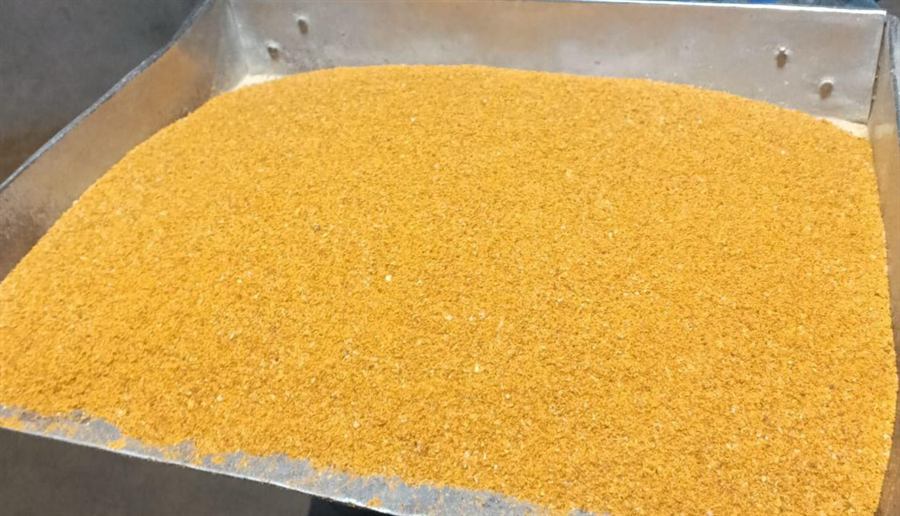 Maize DDGS (Distillers Dried Grains with Solubles) — the bright yellow-orange colour is the quality marker of well-processed corn DDGS. Darker browning indicates over-drying during ethanol production, which damages amino acid availability. Original photograph.
The bulk of DDGS sold in India is Maize DDGS from corn ethanol plants. Specifications:
- Crude protein: 28–30%
- Crude fat: 8–10% (the residual corn oil)
- Crude fibre: 4–7%
- Moisture: under 12%
Where the nutrition comes from
A 100 kg batch of maize contains approximately:
- 72% starch
- 9% protein
- 4% fat
- 9% fibre
- 6% other
After ethanol fermentation removes the starch, what's left is:
- ~0% starch (consumed by yeast)
- ~30% protein (3.3× concentration)
- ~12% fat (3× concentration)
- ~13% fibre (1.5× concentration)
- ~17% yeast cell bodies, soluble fermentation products
- Trace amino acids, B-vitamins, minerals
The "3×" concentration effect is the central feature of DDGS — protein and fat go up significantly per kilogram, but so does any contaminant including aflatoxin.
Energy density
Maize DDGS is high in energy because of the residual fat. TDN of 80–85% makes it comparable to maize itself in energy density, with the bonus of higher protein. This is what makes it attractive to feed mills.
Rice DDGS — the high-protein alternative
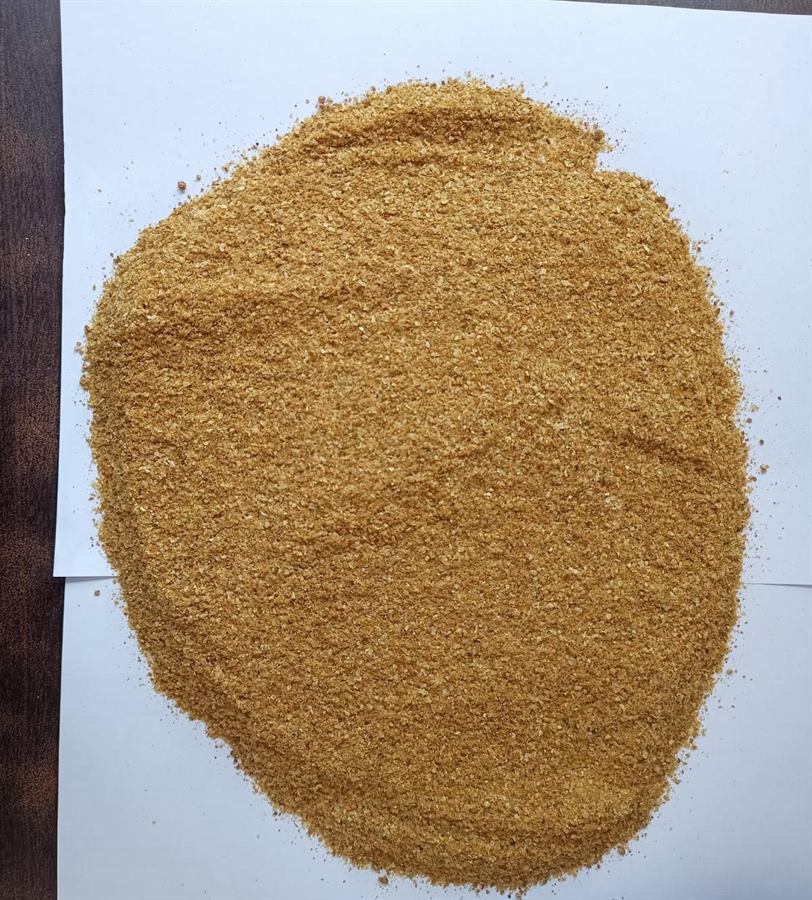 Rice DDGS — visibly browner and more flake-like than maize DDGS due to the rice grain base and a different ethanol-production process. Higher protein (45% minimum) but lower fat (under 1%) than corn DDGS. Original photograph.
Rice DDGS is produced from rice-based ethanol plants. Because rice has less starch than maize (about 65% vs 72%) and more protein (about 8% vs 9% but with different concentrations of fat and fibre), the post-fermentation residue is higher in protein:
- Crude protein: 45% min (sometimes 48–50% in premium grades)
- Crude fat: under 1%
- Crude fibre: 7–10%
Rice DDGS competes more with soybean meal (45–46% protein) than with maize DDGS. The main advantages:
- Higher protein per kg
- Lower fat — useful when ration fat is already adequate
- Lower aflatoxin risk than maize DDGS
Disadvantages:
- Higher fibre than soybean meal
- Limited supply (rice ethanol is smaller scale than corn ethanol in India)
- More expensive than maize DDGS
Rice DDGS is growing in availability as Indian rice ethanol capacity expands under the EBP.
Maize DOC (De-Oiled Corn DDGS)
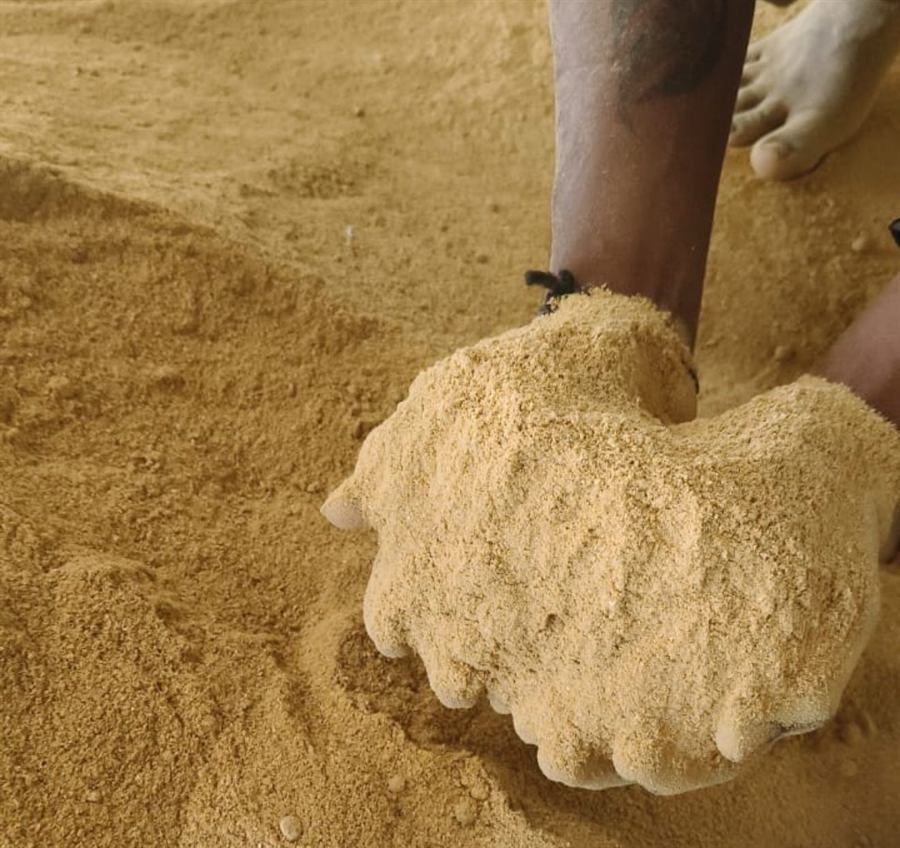 Maize DOC (De-Oiled Cake) — visibly lighter and creamier than regular maize DDGS because the oil has been solvent-extracted, leaving a denser, higher-protein, lower-fat product (under 2% fat versus 8–10% in regular maize DDGS). Original photograph.
Maize DOC — De-Oiled Corn / De-Oiled Distillers Corn — is Maize DDGS with the oil extracted. Specifications:
- Crude protein: 28–30% (similar to regular DDGS)
- Crude fat: under 2% (oil removed)
- Crude fibre: 4–5%
- Moisture: under 10%
The oil is extracted using mechanical pressing or solvent extraction (similar to oilseed processing). The extracted oil is sold separately for biodiesel, animal fat alternatives, or industrial use.
When to use Maize DOC instead of Maize DDGS:
- When the ration already has enough fat (e.g., includes cotton seed cake or bypass fat)
- When fat is too expensive vs the protein you need
- For monogastric feed (poultry, pig) where DDGS fat is less useful
- When energy ration is already covered by maize and bypass fat — and you only want the protein and bulk
Maize DOC typically trades cheaper per kg than full-fat Maize DDGS but delivers the same protein.
What different colours of Maize DDGS mean
This is the practical quality test that experienced feed buyers use. DDGS colour reflects how the product was dried in the ethanol plant — and that colour directly predicts protein digestibility for the animal.
| Colour | Quality | What it means |
|---|---|---|
| Bright golden yellow | Excellent | Fresh, properly dried at controlled temperature; high lysine availability; full protein digestibility |
| Light orange / amber | Standard | Acceptable; mild heat exposure; slightly reduced lysine but still good |
| Medium brown | Marginal | Heat-damaged; Maillard reaction has reduced lysine availability by 10–20%; usable but lower nutritional value |
| Dark brown | Poor | Significant heat damage; lysine reduced 25–40%; protein digestibility reduced; cheaper but not worth the discount for dairy use |
| Black patches / charred | Reject | Burning during drying; severe Maillard damage; unsuitable for dairy |
| Greenish or grey tinge | Reject | Mould growth — aflatoxin risk extreme; unsafe for any animal use |
| Very pale / off-white | Suspect | May indicate dilution with corn fibre or under-fermentation; check protein on CoA |
The science behind the colour-quality link
When DDGS is dried at the ethanol plant, the drying temperature and time affect the Maillard reaction — a chemical reaction between sugars and amino acids that produces brown colour. The reaction also chemically locks up some amino acids (especially lysine), making them unavailable to the animal even though they still show up in the crude protein test on the CoA.
A bright yellow DDGS has had limited Maillard reaction — most lysine is still available. A dark brown DDGS has had extensive Maillard reaction — much of the lysine is locked up, and the protein is less digestible than the CoA suggests.
Practical implication: Two DDGS lots both showing 30% crude protein on the CoA can have very different actual feeding value if one is bright yellow and one is dark brown. The bright yellow lot is worth significantly more per kg even at the same protein number.
This is why Indian compound feed buyers visually inspect every DDGS truck — the colour is the single best practical quality predictor.
Aflatoxin — the most serious DDGS concern
Aflatoxin contamination is the defining quality risk of DDGS — much more serious than for the original maize itself. Aflatoxin B1 is the most regulated mycotoxin in Indian cattle feed, and DDGS concentrates it through the ethanol-fermentation step. Two facts explain why:
1. Aflatoxin is concentrated 3× during fermentation
Ethanol fermentation removes the starch (about 72% of the original maize mass) but leaves all the aflatoxin behind in the residue. The ratio:
If original maize contains X ppb of aflatoxin B1, the resulting DDGS contains approximately 3× X ppb.
A working example:
| Source | Aflatoxin B1 |
|---|---|
| Original maize at 10 ppb (below BIS dairy limit of 20 ppb) | 10 ppb |
| Resulting Maize DDGS | ~30 ppb (above BIS limit) |
| Original maize at 20 ppb (exactly at BIS dairy limit) | 20 ppb |
| Resulting Maize DDGS | ~60 ppb (3× the limit) |
This means even clean maize can produce DDGS that exceeds the regulatory limit for dairy cattle feed. Every lot of DDGS used in dairy compound feed must be tested independently — testing only the source maize is not enough.
2. Heat drying doesn't destroy aflatoxin
Aflatoxin is heat-stable. The drying process at the ethanol plant — temperatures up to 130°C — does not destroy aflatoxin. If anything, it concentrates the toxin into the dried product.
Regulatory framework
| Standard | Aflatoxin B1 limit |
|---|---|
| BIS IS:2052 (compound cattle feed for dairy) | 20 ppb |
| FSSAI (milk M1) | 0.5 µg/kg |
A DDGS lot above 20 ppb cannot be used in compound feed labelled for dairy cattle. Some lots can be diluted with cleaner ingredients to bring the final pellet below 20 ppb — but this requires careful calculation and ongoing testing.
Practical defences
- Test every DDGS lot for aflatoxin B1 before use in dairy compound feed
- Use rapid lateral-flow strip tests (₹100–500 per test, 10 minutes) — see the aflatoxin article
- Buy from established ethanol plants with their own QC programs
- Reject lots above 30 ppb for any feed use; lots 20–30 ppb only for non-dairy with binders
- Use mycotoxin binders when DDGS inclusion is significant (1–2 kg per ton of feed)
- Limit DDGS inclusion — don't push past 15% of concentrate even with clean lots
Rice DDGS aflatoxin risk
Rice DDGS has lower aflatoxin risk than Maize DDGS because rice is less susceptible to Aspergillus flavus than maize. But the 3× concentration rule still applies — testing is still required.
Inclusion rates by animal and stage
Use these limits assuming the DDGS lot has been verified aflatoxin-clean (B1 under 20 ppb on CoA).
| Animal / stage | Maize DDGS / Maize DOC | Rice DDGS |
|---|---|---|
| Lactating cow | 8–15% of concentrate | 5–10% (limited by fibre) |
| Lactating buffalo | 8–15% of concentrate | 5–10% |
| Calf under 3 months | Avoid entirely (aflatoxin sensitivity) | Avoid entirely |
| Calf 3–6 months | Max 5% (only with verified clean lot) | Max 3% |
| Heifers | 5–12% | 5–10% |
| Dry cows | 5–10% | 5–8% |
| Sheep and goats | 5–10% | 3–8% |
| In compound feed pellets | 5–15% (BIS Type-1/Type-2) | 3–10% |
The conservative caps reflect the aflatoxin risk, not the protein value. A cleaner lot can be used at the higher end of each range; suspect lots should be capped at the lower end or rejected.
Where DDGS comes from in India
India's ethanol production has grown rapidly under the Ethanol Blending Programme (EBP), which aims for 20% ethanol blending in petrol by 2025–2026. This has expanded DDGS supply significantly.
Major DDGS production hubs
| Region | DDGS type | Notes |
|---|---|---|
| Uttar Pradesh | Maize DDGS, Maize DOC | Large maize ethanol plants; biggest single source |
| Maharashtra | Mixed grain + molasses-based ethanol | Some grain DDGS; mostly bagasse |
| Karnataka, Tamil Nadu | Rice DDGS (growing) | Rice-based ethanol plants |
| Haryana, Punjab | Small grain ethanol | Local supply |
| Gujarat | Mixed | Some grain ethanol capacity |
| Andhra Pradesh, Telangana | Maize and rice ethanol | Growing capacity |
Distribution is mostly within the producing state due to freight costs. Buyers in states without ethanol plants pay freight premium.
Quality standards: what to check before buying
A reputable Certificate of Analysis for DDGS should report:
| Parameter | Acceptable range |
|---|---|
| Crude protein | 28% min for Maize DDGS / DOC; 45% min for Rice DDGS |
| Crude fat | 8% min for full-fat Maize DDGS; under 2% for Maize DOC; under 1% for Rice DDGS |
| Crude fibre | Under 7% for Maize DDGS; under 5% for DOC; under 10% for Rice DDGS |
| Moisture | Under 12% |
| Acid insoluble ash | Under 3% |
| Aflatoxin B1 | Under 20 ppb (critical for dairy) |
| Yeast count | Under 10⁶ CFU/g (microbiology, less critical for ruminants) |
Insist on aflatoxin B1 testing on every CoA. No exceptions. The 3× concentration risk makes this non-negotiable.
Storage and handling
DDGS storage practices:
- Off-floor stacking on wooden or plastic pallets
- Cool, dry storage below 30°C and 70% relative humidity
- Bag stacking maximum 12–15 high
- FIFO rotation strictly enforced
- Buffer time: 1–2 months ideal; 3 months maximum; beyond that, aflatoxin risk rises and palatability declines
- Monsoon storage: especially careful — humidity drives new mould growth on residual organic material
DDGS attracts insects and rodents more than other feed ingredients due to residual yeast and fermentation products. Standard pest control is more important than for soybean meal or maize.
Cost-benefit vs alternative protein sources
| Ingredient | Crude protein | Approximate price ratio (vs soybean meal) | Aflatoxin risk |
|---|---|---|---|
| Soybean meal (Normal) | 45–46% | 100% (reference) | Low |
| Maize DDGS | 28–30% | 60–70% | High (3× concentration) |
| Rice DDGS | 45% min | 75–85% | Moderate |
| Maize DOC | 28–30% | 55–65% | High |
| Cotton seed cake (premium) | 22% | 50–60% | Moderate |
| Mustard cake (DOMC) | 37% min | 65–75% | Low |
DDGS is among the cheapest protein sources per kg of crude protein — but the aflatoxin discount eats into the savings when you factor in testing, binders, and rejection rates.
Conclusion
DDGS — Maize DDGS, Rice DDGS, and Maize DOC — are valuable, fast-growing protein and energy ingredients in modern Indian cattle feed. Maize DDGS delivers 28–30% protein and 8–10% fat at attractive prices. Rice DDGS pushes protein to 45% min with very low fat. Maize DOC offers the protein of DDGS without the fat, useful when ration fat is already high.
Three rules separate good DDGS use from bad:
- Read the colour — bright yellow is high digestibility; dark brown is heat-damaged with reduced lysine availability
- Test for aflatoxin on every lot — the 3× concentration rule means even clean source maize can produce DDGS over the BIS dairy limit
- Cap inclusion conservatively — 8–15% of concentrate, even with verified clean lots
Used carefully within these guardrails, DDGS is one of the highest-ROI modern protein ingredients available to Indian compound feed manufacturers. Used carelessly, it is the single fastest path to milk M1 rejection at the processor.
Frequently asked questions
What is DDGS and how is it made?+
What is the difference between Maize DDGS, Rice DDGS, and Maize DOC?+
What does the colour of Maize DDGS tell me about its quality?+
Why is aflatoxin a serious concern with maize DDGS?+
What is the inclusion rate of DDGS in cattle feed?+
Where does DDGS come from in India?+
Related articles
Liquid Molasses in Cattle Feed — Specs, Inclusion Rate, Tenders & Sourcing in India
Liquid molasses in Indian cattle feed pellets — Grade A specs, Brix and moisture, inclusion rate, tender sourcing, and the 2026 UP shortage.
Wheat Bran (Gehu Chokar) in Cattle Feed
Wheat bran (gehu chokar) in Indian cattle feed — fine, super fine, and coarse types, 15% protein, and why DORB is replacing it in compound feed pellets.
Groundnut Cake (Mungphali Khal) in Cattle Feed
Groundnut cake (mungphali khal) in Indian cattle feed — 38-45% protein, coin-shape sizing, aflatoxin risk, BIS limits, and Saurashtra sourcing.