Calf Starter Feed: Complete Guide from Birth to Weaning
By Parv Badjatiya · Published Mon May 18 2026 00:00:00 GMT+0000 (Coordinated Universal Time) · Updated Mon May 18 2026 00:00:00 GMT+0000 (Coordinated Universal Time)
Why the first 6 months of a calf's life define its future as a dairy animal
The first 24 hours, the first 8 weeks, and the first 6 months of a dairy calf's life shape almost everything that follows — adult body weight, age at first calving, lifetime milk production, and even fertility years later. Calf nutrition is not a place to save money. It is the single highest-ROI nutritional decision in any Indian dairy operation. A calf raised correctly grows into a heifer that calves at 24 to 30 months and milks for 5 to 7 lactations. A calf raised badly stays small, calves late, milks poorly, and leaves the herd early.
This guide walks through the complete nutrition program from birth to weaning — colostrum, milk feeding, the introduction of calf starter feed, weaning protocol, and the common mistakes that hold back Indian smallholder dairy.
Stage 1: Colostrum (first 24 hours)
Colostrum — the first secretion from the udder after calving — is biologically different from regular milk. It contains 5 to 7 times more total solids, 5 times more protein, very high concentrations of antibodies (immunoglobulins), and concentrated vitamins A, D, and E.
Critically: a newborn calf cannot make its own antibodies. The immune protection it carries through the first weeks of life comes entirely from colostrum it absorbs in the first hours of life. The calf's intestine is "open" to absorbing antibodies for only about 24 hours after birth — most absorption happens in the first 6 hours.
Colostrum feeding protocol:
- 1Within 1 hour of birth: 2–3 litres
The single most important feed of the calf's life. The intestine is most "open" to absorbing antibodies in the first 6 hours — every hour of delay reduces transfer of passive immunity.
- 26–8 hours later: 2 litres
Second feeding. Still high absorption — keep delivering colostrum while the gut is open.
- 312–24 hours later: 1.5–2 litres
Third feeding. After 24 hours the gut "closes" and antibodies can no longer be absorbed whole — what's not in the bloodstream by now will not get there.
- 4Total target: 6–8 L in 24 hours (~10% of body weight)
A calf that misses colostrum or gets it late will spend its life immunologically weaker — more disease, slower growth, lower lifetime yield. There is no compensation for a missed colostrum window.
| Time after birth | Quantity | Note |
|---|---|---|
| Within 1 hour | 2–3 litres | The single most important feed of the calf's life |
| 6–8 hours later | 2 litres | Second feeding |
| 12–24 hours later | 1.5–2 litres | Third feeding |
| Total in 24 hours | 6–8 litres | Approximately 10% of body weight |
A calf that misses colostrum or gets it late (after the gut has "closed" at 24+ hours) will spend its life immunologically weaker — more disease, slower growth, lower lifetime yield. Even a single delayed or skipped colostrum feeding cannot be fully compensated for later.
After 24 hours, the cow continues to produce transition milk for about 5 days. This is also nutritionally rich and should be fed to the calf.
Stage 2: Milk feeding (day 4 to weaning)
From day 4 onwards, the calf gets either whole milk or commercial milk replacer. In Indian smallholder dairy, whole milk is the dominant choice because it's directly available on-farm. Milk replacers are growing slowly among larger operations.
Daily milk feeding:
- Volume: 8–10% of body weight per day
- Split: 2 to 3 feeds per day (3 feeds in week 1–2, then 2 feeds)
- Temperature: 38–40°C (body temperature) — never cold
- Hygiene: clean bucket or bottle, fresh milk only, no leftovers
- Method: bucket feeding is most common; teat feeding is more natural but requires more equipment
Approximate quantities by age:
| Calf age | Body weight | Daily milk |
|---|---|---|
| Birth (day 4–7) | 25–30 kg | 2.5–3 L |
| Week 2 | 28–35 kg | 3–3.5 L |
| Week 4 | 35–45 kg | 3.5–4.5 L |
| Week 6 | 45–55 kg | 4–5 L |
| Week 8 | 55–65 kg | 4–5 L (start reducing) |
| Week 10–12 | 65–80 kg | 2–3 L (weaning down) |
The volume tops out around 4–5 L/day. After week 6–8, milk is gradually reduced as dry feed intake rises.
Stage 3: Introducing calf starter feed (from week 1)
Even though milk is the main feed in the early weeks, introduce a small amount of calf starter feed from the end of week 1. This early exposure does three things:
- Stimulates rumen development. The microbial population that adult cattle depend on for fibre digestion has to colonize the rumen over the first months of life. Early exposure to dry feed kickstarts this.
- Builds the habit of eating dry feed. Calves are creatures of habit. A calf that learns to eat solid feed early will transition smoothly through weaning. A calf that never sees solid feed until week 6 will struggle.
- Reduces weaning stress. The fewer changes at weaning, the less yield and growth setback.
Place a small amount (50–100 g) of calf starter in a clean bucket near the calf's resting area. Refresh daily. Most of it gets wasted in week 1, that's expected — the goal is exposure, not nutrition.
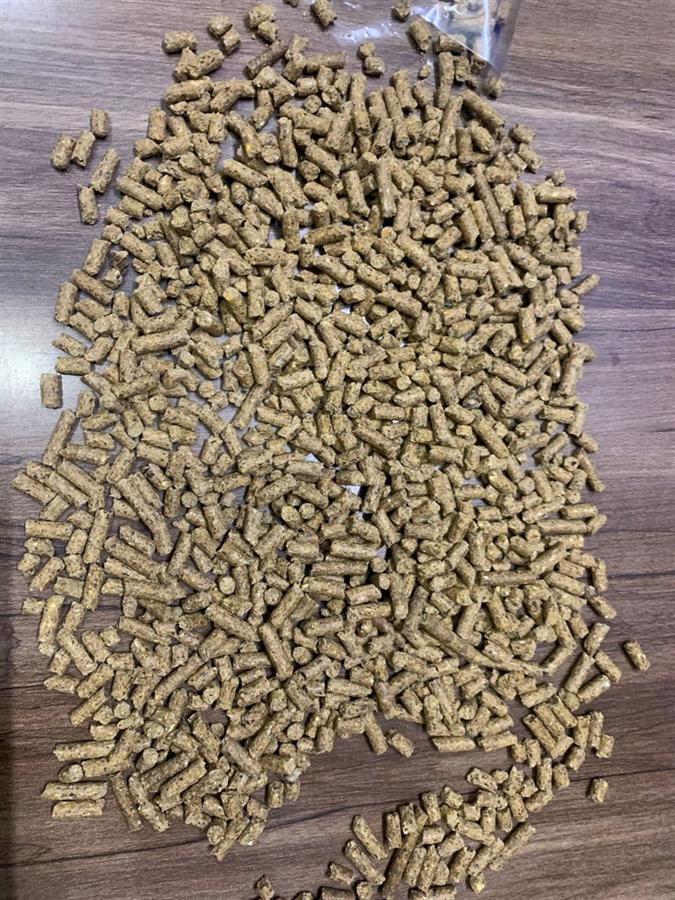 Calf starter feed in 4 mm cylindrical pellets — specifically sized for calves aged 15 days to 3 months. Smaller than the 6–8 mm pellets used for adult cattle, easier for a calf's developing rumen and small mouth to chew and digest. Original photograph.
What makes a proper calf starter feed
Calf starter feed sold in India must meet the BIS Type-1 specification under IS:2052 — the higher-quality grade of compound cattle feed. The three nutritional minimums that matter most for a calf are:
- Crude protein: 22% minimum
- Crude fat: 4% minimum
- Crude fibre: 10% maximum
For the full 15-parameter Type-1 label specification (vitamins, minerals, aflatoxin limits, T.G.U, etc.), see the Compound Cattle Feed article.
What makes calf starter different from a regular adult Type-1 feed are two additional calf-specific requirements that BIS Type-1 alone doesn't guarantee — and which the manufacturer must layer on top:
1. No urea, ever
Authentic calf starter feed contains NO urea. This is the most important safety distinction between calf starter and adult cattle feed.
Adult cattle feeds sometimes include urea as a cheap non-protein nitrogen (NPN) source. Adult ruminants have a fully developed rumen with billions of microbes that convert urea → ammonia → microbial protein. The conversion is efficient, the ammonia is detoxified, and the microbial protein then passes to the small intestine.
Calves under 3 months have undeveloped rumens with limited microbial populations. They are functionally closer to monogastrics than to adult ruminants. If a calf ingests urea, the conversion path is broken — ammonia accumulates in the rumen, is absorbed into the bloodstream unchecked, and causes urea toxicity (also called ammonia poisoning). Symptoms include tremors, frothing, recumbency, and death within hours.
Check the bag label — calf starter feeds will explicitly show Urea: 0 (or not present) under the nutrient composition. If the label doesn't make this clear, or if the product is sold as generic "cattle feed" without a starter designation, do not feed it to calves under 3 months.
2. High energy density
Calf starter requires higher energy density than adult cattle feed because:
- A growing calf adds roughly 600–800 g of body weight per day
- That growth requires concentrated calories — body weight gain plus skeletal development plus rumen development all run simultaneously
- The calf's stomach capacity is small relative to its energy needs
This is why the BIS Type-1 Crude Fat minimum of 4% (vs Type-2's 3%) is appropriate — the extra dietary fat provides the energy density a growing calf needs without bulking up the feed beyond stomach capacity.
Typical calf starter formulation
A representative calf starter compound feed formula:
| Ingredient | % of formula |
|---|---|
| Maize (cracked) | 30% |
| Soybean meal (46% protein) | 20% |
| Cotton seed cake (decorticated, premium) | 15% |
| DORB | 12% |
| Wheat or wheat bran | 10% |
| Molasses | 5% |
| Vitamin and additive premix | 5% |
| Mineral mixture | 2% |
| Common salt | 1% |
| Urea | 0% |
Approximate nutritional outcome on a dry-matter basis:
- Crude protein: ~22%
- Crude fat: ~4–5%
- Crude fibre: ~8–9%
- TDN: ~76–78%
Note that this formulation uses decorticated cotton seed cake (where hulls are removed before pressing, raising protein and lowering fibre) and less DORB than an adult feed (DORB contributes too much fibre for a young calf). This is the formulation discipline that distinguishes a proper calf starter from a re-labelled adult feed.
Daily feeding schedule by age
| Calf age | Calf starter / day | Milk / day | Water |
|---|---|---|---|
| Week 1 | 50–100 g (introduction only) | 2.5–3 L | Free access from day 4 |
| Week 2 | 100–250 g | 3–3.5 L | Yes |
| Week 3–4 | 250–500 g | 3.5–4.5 L | Yes |
| Week 5–6 | 500–750 g | 4–5 L | Yes |
| Week 7–8 | 750 g – 1 kg | 4–5 L | Yes |
| Week 9–10 | 1–1.5 kg | 3 L (reducing) | Yes |
| Week 11–12 | 1.5 kg | 1–2 L (weaning down) | Yes |
| Week 13–16 (post-wean) | 1.5–2 kg | 0 (weaned) | Yes |
| Month 4–6 | 2–2.5 kg | 0 | Yes |
Water is critical from day 4 onwards. Many smallholder farmers wait too long to provide water to calves — this is a costly mistake. Water is essential for rumen microbe establishment, and a calf without continuous water access grows substantially slower than one with it.
Weaning: when and how
Weaning is not a date — it is an intake threshold. The right rule:
A calf is ready to wean when it has been eating at least 1 kg of calf starter feed per day for 3 consecutive days.
Most Indian dairy calves hit this threshold somewhere between 8 and 12 weeks of age. Some early-developing calves reach it at 7 weeks; some slower calves take 14 weeks. Use the intake test, not the calendar.
Weaning protocol (over 7–14 days):
| Day | Milk per day | Calf starter per day |
|---|---|---|
| Day 1–3 (start of weaning) | Reduce to 2 L | 1 kg |
| Day 4–7 | 1 L per day | 1.2–1.5 kg |
| Day 8–10 | 0.5 L per day | 1.5 kg |
| Day 11–14 | 0 (weaned) | 1.5–2 kg |
Abrupt weaning (cutting milk in one day) stresses the calf, often causing a 1–2 week growth setback and sometimes scouring (diarrhoea). The 7–14 day gradual taper is the universally recommended approach.
After weaning: transition to grower feed
From weaning until about 6 months of age, the calf continues to eat calf starter at 1.5–2.5 kg/day. After 6 months, most operations transition to a grower feed — still BIS Type-1, but with the energy density slightly reduced because the calf is no longer doubling its weight every few months.
The same Type-1 compound feed product is often marketed by manufacturers for multiple life stages — calf starter, grower, heifer, transition, and pregnancy use — with the difference being feeding rate rather than formulation. Some manufacturers do produce specialised variants for each stage; others use a single Type-1 product across the lifecycle and let the daily feeding quantity adjust to the animal's needs.
Six common calf nutrition mistakes (and how to avoid them)
- Missing or delayed colostrum. The single biggest mistake. Cannot be made up later. Always feed colostrum within 1 hour of birth.
- Feeding adult cattle feed (especially urea-containing) to calves. Adult feed may contain urea. A calf under 3 months can die from a few hundred grams of urea-containing feed. Always check the bag for an explicit calf starter designation and 0% urea declaration.
- No water until weaning. Water is essential from day 4. Without it, rumen development stalls and calf starter intake stays low.
- Cold milk feeding. Milk fed at room temperature in winter causes scouring (diarrhoea). Always warm to body temperature (38–40°C).
- Skipping mineral mixture in calf starter. Some manufacturers cut cost by under-mineralising calf starter. Calves need 2% mineral mixture inclusion to support rapid skeletal growth.
- Weaning by calendar instead of by intake. Calves weaned at 8 weeks who aren't yet eating 1 kg/day of starter will plateau in growth for 2–3 weeks. Use the intake test.
Disease prevention via nutrition
Three nutrition-driven disease patterns to watch for:
- Scouring (diarrhoea) — usually caused by cold milk, dirty feeding equipment, sudden ration changes, or contaminated water. Prevention is hygiene + consistent feeding + warm milk.
- Bloat — undeveloped rumens are vulnerable to gas accumulation. Avoid sudden introduction of high-grain feeds, ensure forage exposure as the calf grows.
- Weak hooves and slow growth — chronic deficiency of minerals (calcium, phosphorus, zinc, copper). Use a properly formulated mineral mixture from week 1 onwards.
A calf with persistent issues despite good basic care is usually showing a chronic micronutrient deficiency. The right diagnostic step is to verify the calf starter is meeting BIS Type-1 specifications and the mineral mixture is meeting the NDDB standard.
Cost of raising a dairy calf in India
A rough cost breakdown for raising an Indian dairy calf from birth to 6 months:
| Cost component | Approximate cost |
|---|---|
| Colostrum and transition milk | Negligible (from dam) |
| Whole milk (8 weeks, 4 L/day average) | 200 L of milk × ₹40/L = ₹8,000 |
| Calf starter feed (6 months, 200 kg total) | 200 kg × ₹40/kg = ₹8,000 |
| Mineral mixture, vitamins, premix | ₹1,000 |
| Health care (vaccines, deworming) | ₹1,500 |
| Housing, water, labour | ₹3,000 |
| Total | ₹21,500 |
A heifer reaching first calving at 24–30 months represents 18–24 more months of grower-and-heifer feeding (~₹40,000–60,000 additional) — but the calf-stage investment is what determines whether all that follow-on spending produces a profitable adult.
Conclusion
Calf starter feed is the foundation of profitable dairy. It must meet BIS Type-1 specifications (≥22% crude protein, ≥4% fat, ≤10% fibre), contain absolutely no urea, and supply concentrated energy for the calf's rapid growth phase. Feed colostrum within the first hour, transition to whole milk for 8–12 weeks, introduce calf starter from week 1, provide water from day 4, and wean by intake (≥1 kg starter/day for 3 days) rather than by calendar.
Get this right, and the calf grows into a heifer that calves on time and milks well for years. Get it wrong — especially with urea-contaminated feed or skipped colostrum — and no amount of later nutrition can fully recover the loss. There is no shortcut; the only path to profitable Indian dairy passes through disciplined calf rearing.
Frequently asked questions
What is calf starter feed and why is it different from regular cattle feed?+
Why must calf starter feed never contain urea?+
When should calf starter feed be introduced to a calf?+
What is the right weaning age for an Indian dairy calf?+
What is the typical formulation of calf starter feed?+
How much milk should I feed a calf per day?+
Related articles
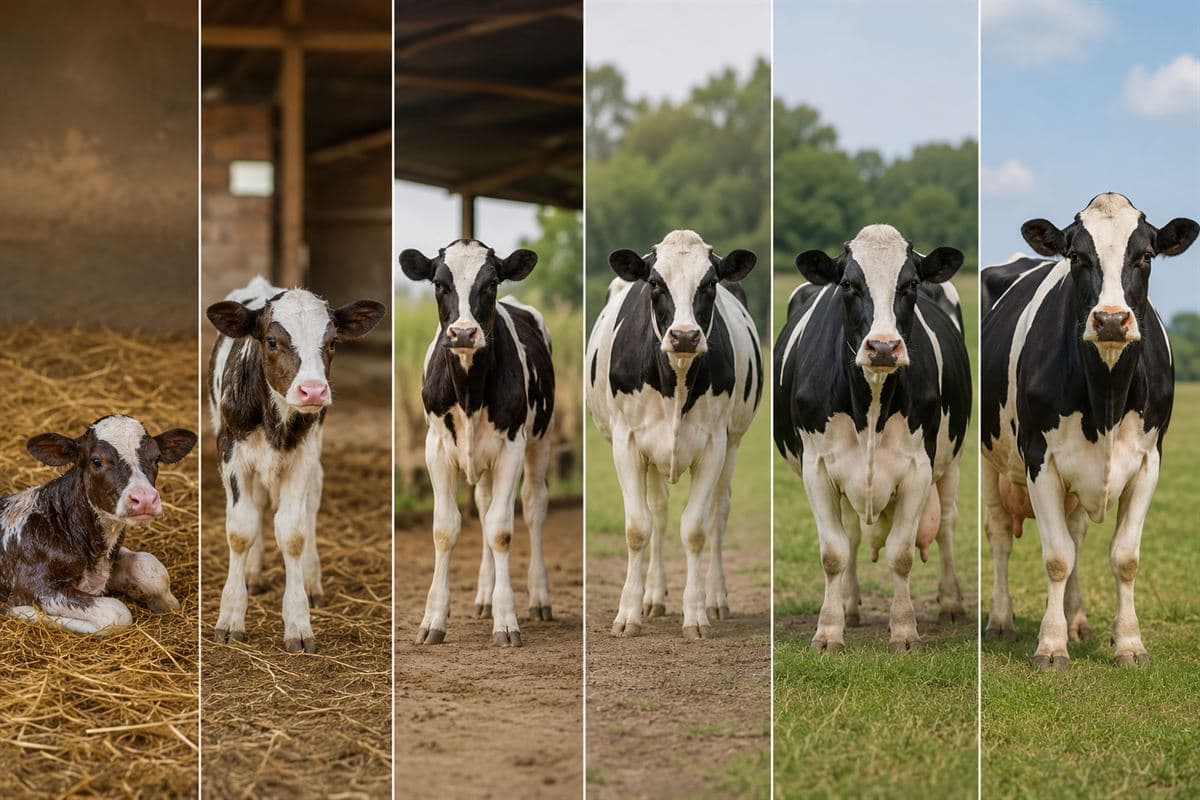
Cattle Feed Stages Explained — Starter, Grower, Heifer, Pregnancy, Close-Up & Transition
Stage-by-stage guide to compound cattle feed in India — starter, grower, heifer, pregnancy, close-up & transition pellets (BIS Type-1, no urea, 25 kg).
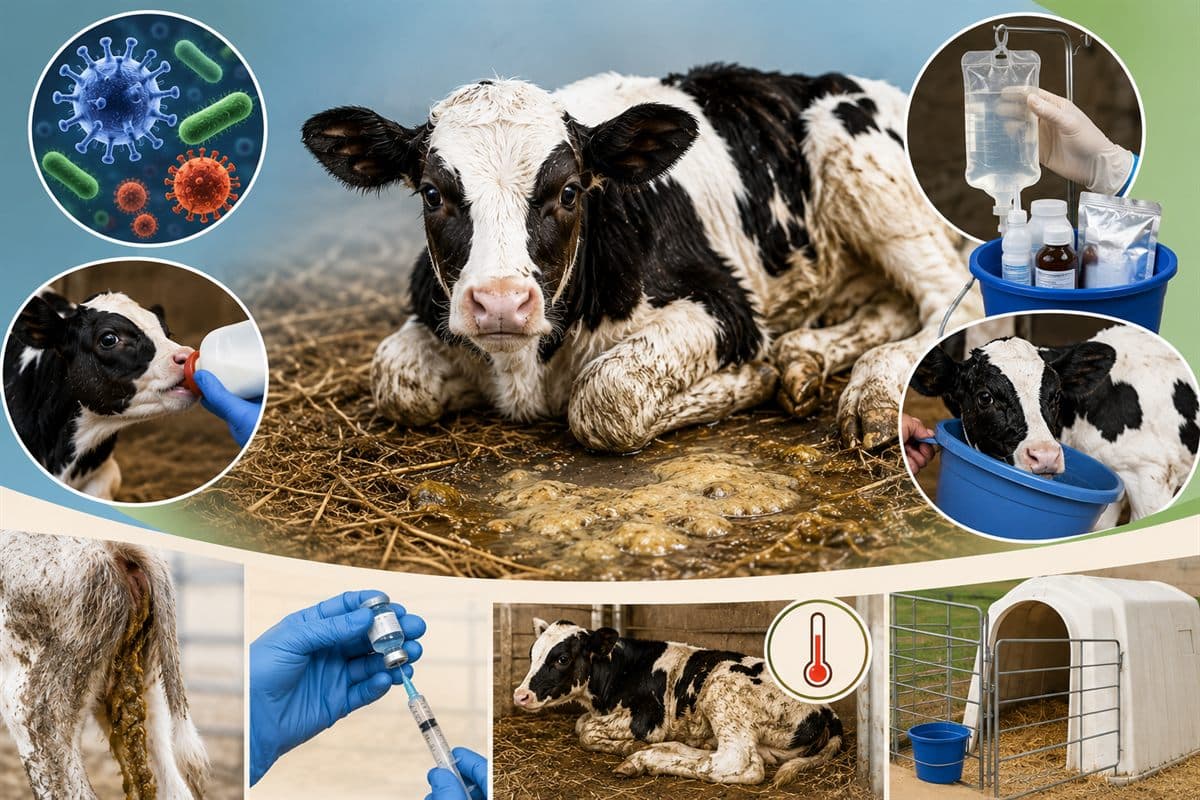
Calf Diarrhoea (Scouring): Causes, Treatment & Prevention
Calf scouring in Indian dairy — nutritional vs infectious causes, dehydration danger, ORS treatment, when to use antibiotics, and prevention via colostrum.
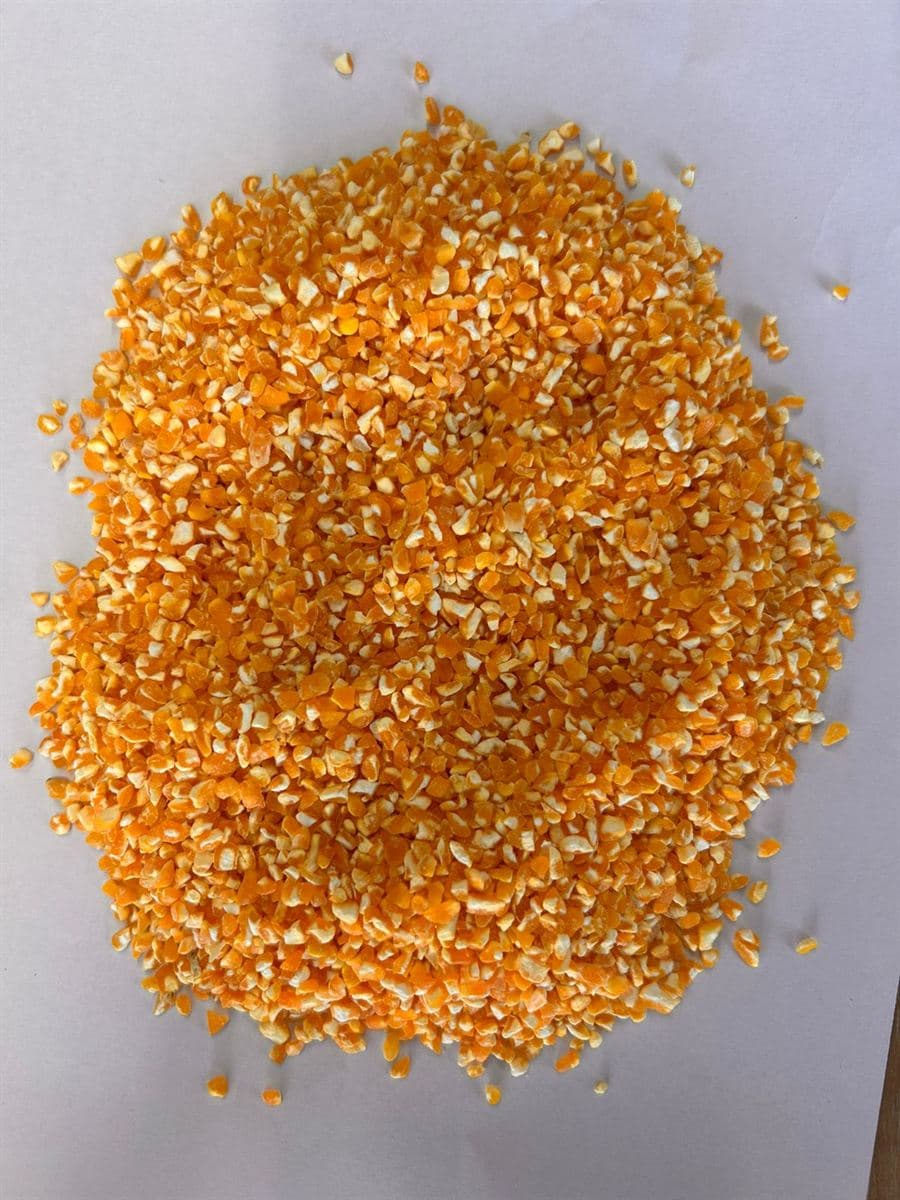
Corn Grits (Groat of Corn) in India — Specifications, Particle Size & Industrial Uses
Corn grits (groat of corn) in India — production, key specs, particle size, and uses in ethanol, brewing, food, and premium calf starter feed.