Cattle Feed Stages Explained — Starter, Grower, Heifer, Pregnancy, Close-Up & Transition
By Parv Badjatiya · Published Sun May 24 2026 00:00:00 GMT+0000 (Coordinated Universal Time) · Updated Sun May 24 2026 00:00:00 GMT+0000 (Coordinated Universal Time)
A cattle feed bag is not one product. It's a family of products. The same brand often sells six different formulations — one for the 15-day-old calf, another for the 9-month-old growing heifer, another for the cow in her last 3 weeks of pregnancy, another for the day she calves, and another for peak lactation. Each is a different mix of grains, oilseed cakes, brans, minerals, and stage-specific additives — engineered for the very different physiology the animal is in at that moment.
This article walks through the six stage-specific compound feeds manufactured in India, what each one contains, why the stages exist, and what to look for on the bag. If you're a farmer choosing feed, a new dealer trying to understand the catalogue, or a small-scale entrepreneur thinking about feed manufacturing — this is the map.
The six stages at a glance
- 1Starter — 15 days to 3 months
Rumen development and early growth. Very high protein (22%) and fat (4%), low fibre, coccidiostat included, zero urea. The most under-bought stage feed in Indian dairy.
- 2Grower — 3 to 12 months
Frame and muscle growth. Rumen is now functional. 20% protein, 10-12% fibre. Calcium and phosphorus balanced for skeletal development.
- 3Heifer — 12 to 18 months
Prepare for breeding. Continue skeletal growth without over-conditioning. Body condition target: BCS 3.0. Phytase and beta-carotene typically added.
- 4Pregnancy (Gestation) — conception to 3 weeks before calving
Foetal growth and dam health maintenance. Steady-state nutrition with moderate energy.
- 5Close-up — last 3 weeks before calving
Prevent milk fever and prepare for calving. Anionic salts (DCAD diet) for high-risk cows. Critical window for hypocalcaemia prevention.
- 6Transition — 3 weeks before to 3 weeks after calving
Adjust metabolism for lactation. Rumen buffers and choline added. Highest nutrient density of any stage feed.
After the transition window closes (about 3 weeks into lactation), the animal moves on to a standard lactating feed — typically a high-protein Type-1 or Type-2 compound feed sold by the same manufacturer, which is a separate product line not covered by the six stages above.
What's true for every stage feed in India
Before diving into each stage, there are five things common to all six products that are worth knowing up front. These are the rules every reputable manufacturer follows, regardless of which stage feed you pick up off the dealer's shelf:
- They are sold as pellets, not mash or crumble. Pellet diameters range from 4 mm (starter feeds) to 8 mm (heifer, pregnancy, lactation feeds). The smaller pellet for younger animals is easier to chew and digest.
- Stage feeds are typically packed in 25 kg HDPE woven sacks with an inner liner — smaller than the 50 kg bag used for general Type-1 / Type-2 compound feed. The smaller pack reflects the more specialised additive packages and the lower daily intake at younger stages (where a 50 kg bag would run past the freshness window before being consumed).
- All six stages are manufactured under the BIS IS:2052 Type-1 specification — minimum 20% crude protein, minimum 3% fat, maximum 12% crude fibre, defined mineral and vitamin profile. Type-2 (lower 18% protein floor) is generally reserved for routine maintenance / dry feeding and isn't typically used as a stage-specific product.
- They are manufactured WITHOUT urea. This is the single biggest difference between stage feeds and generic lactating compound feed. Stage feeds avoid urea because:
- Calves and heifers have under-developed rumens and cannot safely metabolise non-protein nitrogen (NPN). Urea can cause ammonia toxicity in young animals.
- Pregnant and close-up cows need very stable nitrogen sources; urea adds metabolic variability the manufacturer can't risk in these sensitive stages.
- For the manufacturer, sticking to "no urea" across the entire stage range is a clean, defensible labelling claim that travels well to all buyers. See our urea in cattle feed article for the full picture on when urea is and isn't appropriate.
- Stage-specific medicinal and functional additives are added based on what each life stage needs. Coccidiostat for starter. Phytase and beta-carotene for heifer. Anionic salts for close-up. Rumen buffers and choline for transition. The base formulation might be similar; the additive package is what makes each stage feed actually a stage feed.
Now to each stage in turn.
Stage 1 — Calf Starter (15 days to 3 months)
This is one of the two most nutrient-dense products in the stage range (the other being transition feed), and the most under-bought one in Indian dairy. Most farmers skip it or feed too little of it.
The reason it matters: until about 3 months of age, a calf's rumen is barely functional. She is digesting nutrients the way a monogastric (single-stomach) animal does — through her abomasum, the "true stomach," not through rumen fermentation. Her gut needs concentrated, easily-digestible nutrition.
A typical calf starter formulation:
- 22% crude protein
- 4% fat, often with added high-energy ingredients
- 8% crude fibre max — kept low because the rumen can't yet process much fibre
- High-quality protein sources — soybean meal, fish meal in some formulations, milk-replacer-grade ingredients
- Coccidiostat — Amprolium, Diclazuril, or Monensin to prevent coccidiosis, the parasitic gut infection that's the leading cause of calf scour and death in India. See our calf diarrhoea / scouring guide for context on why this matters.
- Yeast culture, probiotics, prebiotics — to seed and stabilise the developing rumen microflora
- Immunity boosters — beta-glucan, mannan-oligosaccharides
- Vitamin and mineral fortification — heavy on vitamins A, D, E; balanced calcium-phosphorus for early skeletal growth
- Zero urea
The daily feeding rate climbs gradually: about 250 g at 15 days, 500 g by 1 month, 1 kg by 2 months, 1.5–2 kg by 3 months — alongside milk and, by the end of the period, small amounts of green or dry fodder.
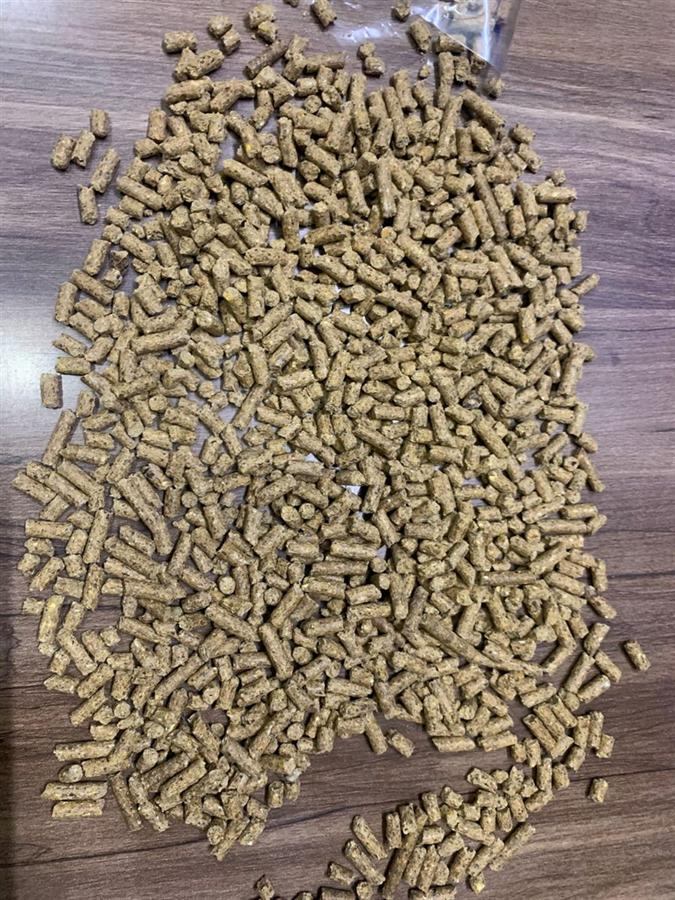 Calf starter feed pellets — 4 mm cylindrical, sized for the calf's small mouth and still-developing rumen. The brown colour comes from the maize, brans, and oilseed meals in the formulation; the slightly different shades visible across pellets reflect the heterogeneous mix of ingredients pressed through the die. Original photograph.
The economic case for calf starter is genuinely strong. Indian field studies (and the global literature) consistently show that calves fed proper starter for the full 90 days produce 10–15% more milk in their first lactation compared to calves on under-nutrition or homemade rations. That uplift carries through the animal's entire productive life. Skipping starter to save ₹2,000 in the first three months easily costs ₹15,000–₹25,000 in lost first-lactation milk. See our dedicated calf starter feed guide for the full programme.
Stage 2 — Grower (3 to 12 months)
By 3 months the rumen is functional enough to digest fibre and ferment carbohydrates the way an adult ruminant does. The calf is now a true ruminant. She doesn't need the very high nutrient density of starter feed anymore — and continuing to feed starter at this age is just expensive.
Grower feed sits at:
- 20% crude protein — enough to support frame and muscle growth without being wasteful
- 4% fat
- 10–12% crude fibre — higher than starter because the rumen can now handle it
- Calcium-phosphorus balanced for skeletal development — the long bones lengthen during this period and need adequate Ca, P, and trace minerals (zinc, manganese, copper)
- Sometimes an ionophore growth promoter (Monensin) for improved feed conversion. This is a manufacturer choice and varies by brand.
- Zero urea
Daily feeding rate: 1.5 to 3 kg, paired with green fodder, dry fodder, and clean water 24×7.
The goal of the grower stage is to reach target body weight on time without becoming over-conditioned. For a Holstein-Friesian crossbred, the target is typically 280–300 kg by 12 months. Hitting that weight means she'll be ready for breeding at 14–16 months. Falling 20% behind that weight delays first calving by 6+ months — which directly reduces her lifetime milk output.
Stage 3 — Heifer (12 to 18 months)
The animal is now in the final stretch before breeding. The first oestrus cycle has started or will start in the next few months. Three things matter at this stage: continue skeletal growth without going to fat, develop a strong reproductive system, and maintain optimal body condition (around BCS 3.0 on the 5-point scale).
Heifer feed formulation:
- 20% crude protein
- 3% fat
- 12% crude fibre
- Mineral fortification specifically tuned for reproductive readiness — extra zinc, selenium, manganese, iodine, cobalt. See our mineral mixture guide for what each of these does.
- Beta-carotene fortification — beta-carotene is essential for ovarian function and embryonic survival
- Phytase in many brands — improves phosphorus availability from plant-based ingredients
- Zero urea
Daily feeding rate: 2 to 4 kg.
The biggest practical mistake at this stage is over-feeding. A heifer over-conditioned with too much grain develops fat deposits in the udder before she ever calves. That fat is laid down in the place where milk-secreting tissue should be — and it permanently reduces her first-lactation yield. The same total nutrients spread across more green fodder and less concentrate produces a healthier reproductive animal.
Stage 4 — Pregnancy / Gestation (conception to 3 weeks before calving)
This is the longest stage feed, covering roughly 7 months for a cow gestating ~280 days. During this period the animal is either still lactating (if her gap-between-calvings is short) or dried off and gestating only.
Dry-period pregnancy feed (the most common use case) is formulated for:
- 20% crude protein — supporting foetal growth and maternal reserves
- 3% fat
- 10–12% crude fibre
- Bypass protein supplementation in the last 60–90 days for foetal growth, when the foetus is gaining ~70% of its birth weight
- Vitamin A, D, E supplementation
- Trace minerals, with phosphorus moderated (high phosphorus pre-calving can trigger milk fever)
- Zero urea
Daily feeding rate: 2 to 4 kg, with green and dry fodder providing the bulk of intake.
For more on managing the dry period overall (when to dry off, two-phase feeding, body condition targets), see our dry cow management guide.
Stage 5 — Close-Up (last 3 weeks before calving)
This is the most underrated and under-bought stage feed in India. It's the difference between a smooth calving with the cow eating again the next day, and a milk fever case at 3 a.m. that requires an emergency vet, IV calcium, and three weeks of lost milk.
The science: in the 21 days before calving, the cow's body is preparing for the calcium surge of lactation. If she's getting plenty of dietary calcium during this period, her parathyroid hormone system goes "quiet" — there's enough calcium coming in, no need to mobilise from bone. Then she calves, and overnight she needs 30+ grams of calcium for milk that she wasn't making yesterday — and her bone-mobilisation system is asleep. She becomes acutely hypocalcaemic — clinical milk fever, the down-cow emergency every dairy farmer knows.
Close-up feed prevents this by manipulating the dietary cation-anion difference (DCAD) — typically making the diet slightly acidic, which keeps the calcium-mobilisation system active and primed for calving day.
Close-up feed formulation:
- 20% crude protein
- 4% fat
- Anionic salts — ammonium chloride, magnesium sulfate, calcium chloride — to lower the DCAD
- Reduced dietary calcium intake (50–60 g/day vs the usual 100+) — counter-intuitive but right
- Choline (rumen-protected) — supports liver function during the metabolic load of calving
- Vitamin E + selenium at higher doses — reduces retained placenta and milk fever risk
- Yeast culture
- Zero urea
Daily feeding rate: 3 to 5 kg.
Farms that use close-up feed properly see clinical milk fever rates drop from 5–10% of calvings to under 1%. They also see fewer retained placentas, fewer cases of ketosis, and faster post-calving feed intake recovery. See our full milk fever / hypocalcaemia article for the detailed clinical picture.
The economic argument is also straightforward: a 25 kg bag of close-up feed costs around ₹800, and a 3-week course requires roughly 3 to 4 bags depending on the daily intake rate. One milk fever case costs at least ₹3,000 in vet bills plus ₹5,000–₹10,000 in lost milk while she recovers.
Stage 6 — Transition (3 weeks before → 3 weeks after calving)
The transition period is the most physiologically demanding window in the cow's entire life. In 6 weeks she goes from "pregnant, producing no milk" to "lactating heavily, foetus delivered, calcium demand quadrupled, dry matter intake half what it should be." More dairy cows are culled because of metabolic problems during transition than at any other life stage combined.
Transition feed is engineered to support this physiological shift:
- 22% crude protein — the highest of any stage feed, matching calf starter
- 4% fat
- High metabolisable energy — the cow needs energy desperately in early lactation but won't be eating enough yet
- Bypass fat — concentrated energy that doesn't disturb rumen fermentation
- Bypass protein — amino acids straight to the small intestine for early-lactation milk synthesis
- Rumen buffers — sodium bicarbonate, magnesium oxide — to prevent acidosis as concentrate intake jumps. See acidosis in dairy cattle.
- Niacin — supports liver fat metabolism and ketosis prevention
- Rumen-protected choline — reduces fatty liver risk
- Yeast culture / probiotics — stabilises rumen microflora during the diet shift
- Vitamin E, selenium, antioxidants
- Zero urea
Daily feeding rate: 4 to 8 kg, scaling up with milk yield as she ramps to peak production.
The transition feed is the bridge between close-up and standard lactating feed. After 21 days post-calving she shifts to whichever lactation feed her milk yield warrants — typically Type-1 compound feed for high yielders, Type-2 for moderate yielders.
How to read a stage feed bag label
Five things to check on the bag before you buy:
- Stage clearly named — "Calf Starter", "Grower", "Heifer", "Pregnancy Feed", "Close-Up", "Transition". A bag without a stage name is just generic feed.
- Crude protein, crude fat, crude fibre, total ash, calcium, phosphorus, salt — these are mandatory disclosures.
- The "without urea" / "no NPN" statement — most reputable stage-feed brands print this prominently. If you can't find it, ask the dealer for confirmation.
- Manufacture date and best-before — stage feeds, especially starter and transition with their additive packages, are at peak quality within 60–90 days of manufacture. Don't buy older stock.
- Batch number and manufacturer details — required for traceability if there's a quality dispute.
Bags should be sealed, dry, free of insect activity, and free of any "off" smell when you press your nose to the seam. A sour or musty smell means the contents have been exposed to moisture.
Common mistakes farmers make with stage feeds
Five mistakes that quietly cost Indian dairy farmers thousands of rupees a year:
- Feeding starter feed beyond 3 months. Once the rumen is functional, the calf doesn't need the dense additive package of starter (coccidiostat, milk-replacer-quality protein, immunity boosters). Grower feed is broadly the same price but better matched to the now-functional rumen. Continuing to feed starter at 6 months is paying for additives the calf no longer needs.
- Skipping the grower-and-heifer stages entirely by going straight from starter to lactating feed. This causes under-development of skeletal structure and over-conditioning, with permanent reduction in lifetime milk yield.
- Skipping close-up feed to save 3 weeks of cost. This is the single most common — and most expensive — false economy in Indian dairy. One milk fever case wipes out 3 years of savings on close-up feed.
- Using lactating feed for dry cows. Lactating feed often has higher calcium than pregnancy / close-up cows need, which raises milk fever risk. Use the right stage feed for the right stage.
- Buying the cheapest brand of starter feed. Calf starter is the one stage where ingredient quality directly affects the animal's lifetime productivity. This is the wrong feed to bargain-shop on.
Pricing across stages
Indian stage-feed pricing is remarkably uniform. Despite the very different additive packages, most brands price all six stages in a narrow band around the same retail figure. As of mid-2026, the typical retail price across stage feeds is:
| Stage feed | Typical price (₹/25 kg bag) | Per-kg cost (₹) |
|---|---|---|
| Calf Starter | ~800 | ~32 |
| Grower | ~800 | ~32 |
| Heifer | ~800 | ~32 |
| Pregnancy / Gestation | ~800 | ~32 |
| Close-Up | ~800 | ~32 |
| Transition | ~800 | ~32 |
For comparison, general (non-stage) compound feed sold in the larger 50 kg commercial bag typically retails at around ₹1,600 for Type-1 and ₹1,350 for Type-2 — broadly the same per-kg cost as stage feeds, but packed in the bigger bag because daily intake at lactation is high enough that a 50 kg bag clears within the freshness window.
Why the uniform pricing? Stage feeds share most of their base formulation — the same maize, oilseed cakes, brans, and minerals. The differentiation is in the additive cocktail (coccidiostat for starter, anionic salts for close-up, niacin and choline for transition, beta-carotene for heifer). The cost of these stage-specific additives is small in absolute terms relative to the base ingredient cost, so it doesn't move the bag price much. From the manufacturer's side, uniform pricing also simplifies dealer pricing and reduces sub-dealer arbitrage between stages.
Prices do vary by region, brand, and the current raw material cost stack. Maize, soybean meal, oilseed cake, and bran movements all flow through to the bag price — see our daily raw material prices for what's currently driving the cost.
Why stage-based feeding is genuinely worth it
Stage-specific feeding isn't a marketing invention. It's grounded in animal physiology — the same animal genuinely needs different things at 1 month, 9 months, 18 months, 8 months pregnant, and 3 days post-calving. The brands selling six different stage feeds aren't doing it to inflate their SKU count; they're doing it because the science says one formulation can't serve all six phases optimally.
For a smallholder running 2–5 cows, picking up the right stage feed off the dealer's shelf is one of the highest-leverage management decisions she'll make. It compounds across the animal's lifetime — better first-lactation yield, fewer health crises, longer productive life, more calves successfully reared.
On a per-kg basis stage feed pricing is roughly the same as general lactating feed (~₹32 per kg either way) — the cost penalty of using stage-specific feed is essentially zero. The cost penalty of not using it is one milk fever case, one missed breeding cycle, or one chronically under-developed heifer. Stage feeding pays for itself in avoided losses.
Get the stage right, and the bag does the work.
Related articles
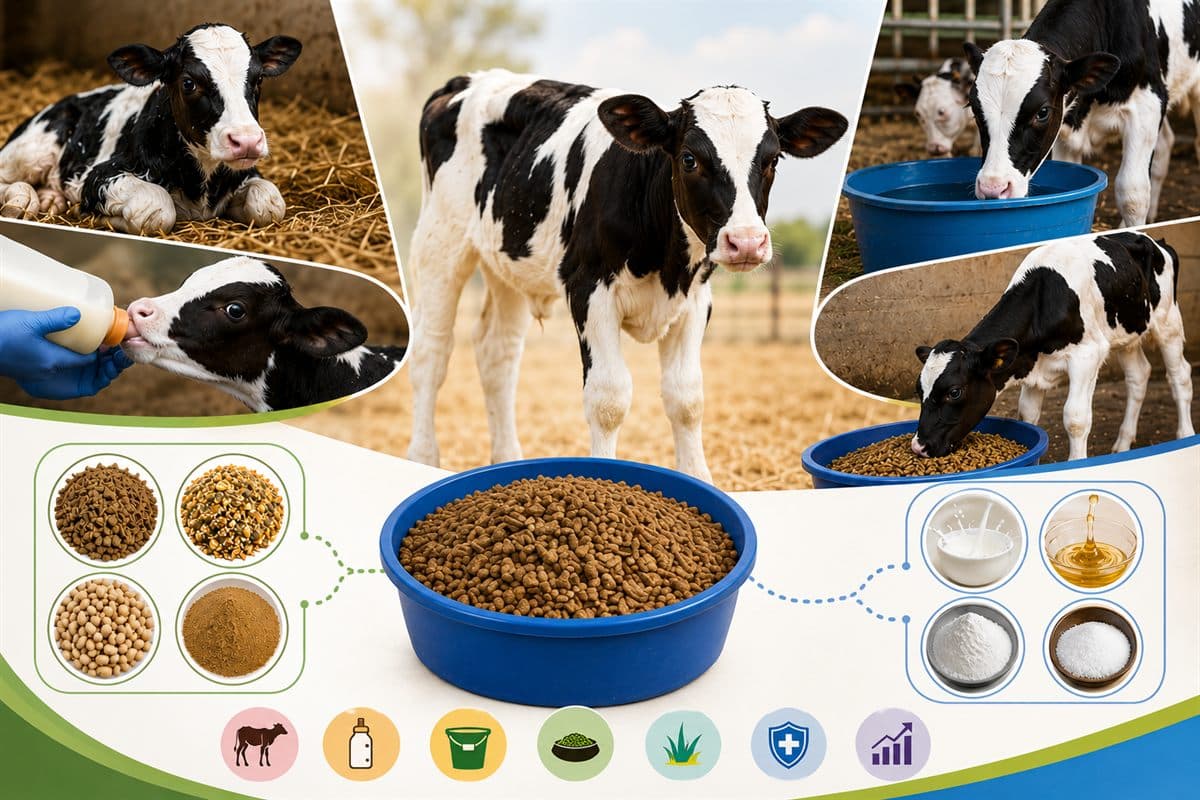
Calf Starter Feed: Complete Guide from Birth to Weaning
Calf starter feed in Indian dairy — colostrum, milk feeding schedule, BIS Type-1 specs, why no urea for calves, weaning age, and common mistakes.
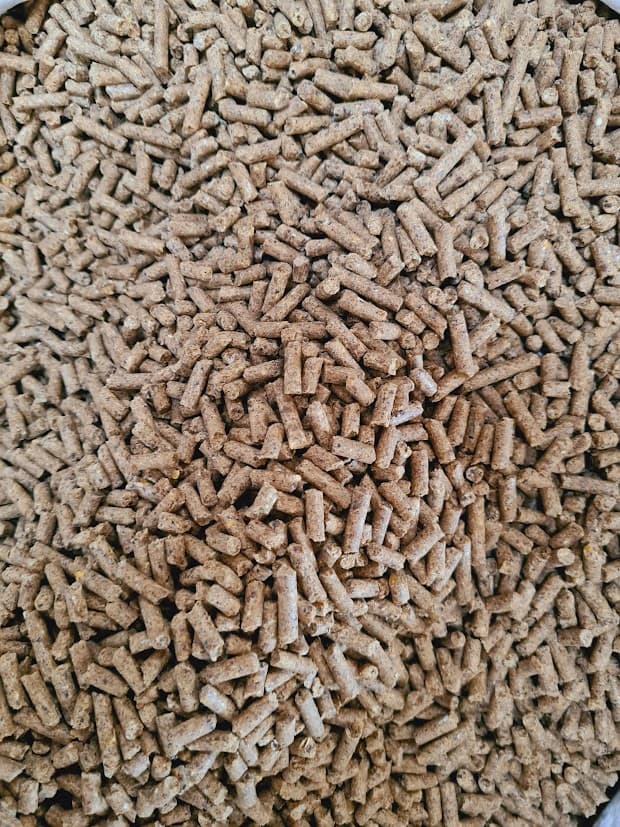
Compound Cattle Feed in India — BIS Type 1 vs Type 2
Compound cattle feed in India — BIS IS:2052 Type 1 vs Type 2 specs, why feed is sold as pellets, the 20% protein labelling rule, and how to choose.
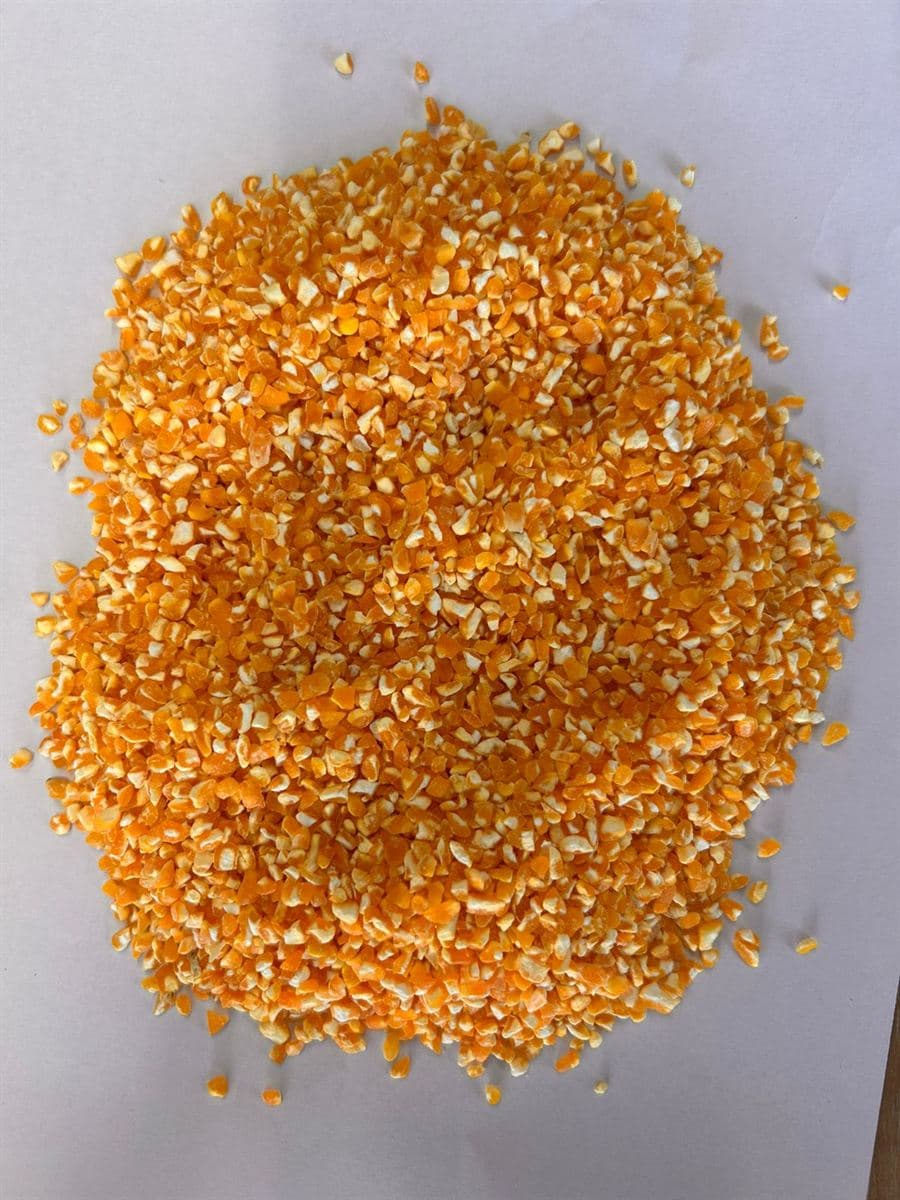
Corn Grits (Groat of Corn) in India — Specifications, Particle Size & Industrial Uses
Corn grits (groat of corn) in India — production, key specs, particle size, and uses in ethanol, brewing, food, and premium calf starter feed.