Acidosis in Dairy Cattle: Causes, Prevention & Treatment
By Parv Badjatiya · Published Mon May 18 2026 00:00:00 GMT+0000 (Coordinated Universal Time) · Updated Mon May 18 2026 00:00:00 GMT+0000 (Coordinated Universal Time)
Why acidosis is the most expensive disease in Indian dairy
Rumen acidosis is the most common and most expensive nutritional disease in Indian dairy cattle. It rarely makes the cow obviously sick — instead it quietly drops milk yield, drops milk fat percentage, causes hoof problems, and shortens productive life. By the time symptoms become unmistakable, the farm has already lost months of profit.
The economic impact of chronic subacute acidosis on a typical Indian dairy is estimated at ₹50,000 to ₹2,00,000 per cow per lactation through reduced yield, lower milk fat (and reduced farm-gate price), increased veterinary costs, and earlier culling. This is the silent leak that holds back many otherwise well-run smallholder and commercial operations.
This article walks through what causes acidosis, the early warning signs, the prevention program (with sodium bicarbonate / meetha soda as the key tool), and the treatment for clinical cases.
The mechanism: starch → acid → low pH
A healthy rumen operates at pH 6.0–6.8 — slightly acidic, optimal for the fibre-digesting microbes that build microbial protein from forage. When an animal eats too much rapidly-fermentable starch (mainly from maize and other grains), the starch is fermented by amylolytic bacteria into lactic acid.
Lactic acid is about 10 times stronger than the volatile fatty acids (acetate, propionate, butyrate) that the rumen normally produces. As lactic acid accumulates:
- Rumen pH drops below 5.5
- Fibre-digesting bacteria (which need pH above 6.0) die off
- Lactic-acid-producing bacteria (which thrive at low pH) multiply further
- The pH drop accelerates
- Below pH 5.0, the rumen wall is damaged
- Acid leaks into the bloodstream → metabolic acidosis
The animal's body has buffering systems to counter this — saliva (rich in bicarbonate), rumen contractions, fibre that stimulates more saliva — but when the starch load exceeds the buffering capacity, the cycle runs away.
Two types: acute and subacute (SARA)
Acute acidosis
Sudden, severe, and rare. A cow accidentally eats a large quantity of grain (broken silo, escape into feed store, sudden ration change). Rumen pH drops below 5.0 within hours. Symptoms develop over 12–48 hours:
- Off feed, depressed
- Bloated, distended abdomen
- Profuse watery diarrhoea
- Recumbent (unable to stand)
- Dehydration, sunken eyes
- Rapid breathing, weak pulse
- Death within 24–72 hours if untreated
Acute acidosis is a veterinary emergency. IV fluids, rumen lavage, and aggressive supportive care are needed.
Remove all concentrate from the trough, offer only fibrous forage and water, and call a veterinarian immediately. Untreated acute acidosis kills within 24–72 hours through rumen wall damage, dehydration, and metabolic collapse. The window for saving the animal is the first 6–12 hours.
Subacute Ruminal Acidosis (SARA)
Far more common, far more economically damaging. SARA is chronic — the rumen spends part of each day (typically 3–5 hours after a concentrate meal) at pH 5.0–5.5 before recovering. The cow doesn't appear acutely sick, but:
- Milk fat percentage drops 0.3–0.8 points over weeks
- Milk yield drops 1–3 L/day
- Dung becomes loose, foamy, smelly
- Cudding time decreases (under 7 hours per day vs healthy 10+ hours)
- Hoof lesions and laminitis develop gradually over months
- Liver abscesses develop in the worst cases
A SARA-affected herd looks "fine" but underperforms by 15–25% on yield, fat percentage, and lifetime productivity.
Why maize is the primary trigger
The most common cause of acidosis in Indian dairy is over-inclusion of maize in the concentrate mix, with or without sudden ration changes.
Maize is approximately 70% starch on a dry-matter basis. When fed at high inclusion (above 35% of concentrate, or with concentrate at more than 60% of total DMI), the rumen receives more rapidly-fermentable starch than it can buffer.
Hard practical limits to avoid acidosis:
| Parameter | Limit |
|---|---|
| Maize in concentrate mix | Maximum 35% |
| Total concentrate as % of DMI | Maximum 60% |
| Forage as % of DMI | Minimum 40% |
| Effective NDF (peNDF) in total ration | Minimum 19–22% |
| Concentrate per feeding | Maximum 2.5–3 kg per single meal |
| Ration change transition | Minimum 21 days (see 21-day transition) |
Other rapidly-fermentable ingredients also contribute: wheat, broken rice, sorghum (jowar), molasses in excess, and certain processed grain mixes. But maize is the most common offender simply because it is the largest single starch source in most Indian rations.
The early warning signs
The earliest reliable sign of subacute acidosis in a dairy herd is a drop in milk fat percentage. Why milk fat?
When the rumen pH drops, the microbial population shifts. Specifically, the bacteria that produce acetate (the main milk-fat-precursor short-chain fatty acid) decline, while those that produce propionate (the main milk-volume-precursor) increase. The result: milk fat falls, sometimes faster than overall yield changes.
Pattern in a herd:
| Time after acidosis onset | Visible symptoms |
|---|---|
| Week 1–2 | Milk fat percentage starts falling |
| Week 2–4 | Loose, foamy, smelly dung; reduced cudding |
| Month 1–2 | Yield drops, intake variability |
| Month 2–6 | Hoof problems begin (laminitis, sole ulcers) |
| Month 6+ | Liver abscesses, displaced abomasum, early culling |
If you see milk fat percentage drop more than 0.3 points over a few weeks without obvious reason, acidosis is the most likely cause. Investigate the ration immediately.
Other diagnostic signs
| Sign | What it indicates |
|---|---|
| Loose, foamy, smelly dung | Reduced rumen fermentation; partly undigested starch in faeces |
| Reduced cudding time (under 7 hours/day) | Acid suppression of rumen contractions |
| Reduced feed intake | Animal self-regulating against acid load |
| Increased water intake | Body trying to dilute rumen acid |
| Mild colic / kicking at abdomen | Rumen wall irritation |
| Sole ulcers, lameness, laminitis | Long-term sign of chronic acidosis |
| Pulpy kidney syndrome | Rare consequence; can be fatal |
| Liver abscesses (at slaughter) | Long-term acidosis history |
A working herd test: at any given time during the day, at least 50% of resting cows should be cudding. If fewer than 30% are cudding, suspect SARA.
The 5-point prevention program
- 1Cap maize at 35% of concentrate
Stay within the limit. DORB, wheat bran, and maize silage provide energy more slowly and don't crash rumen pH.
- 2Keep forage at 40%+ of dry matter intake
For a 14 kg DMI cow, that's at least 5.6 kg DM as forage. Effective fibre stimulates cudding, saliva flow, and natural rumen buffering.
- 3Add sodium bicarbonate (meetha soda) at 1–2% of concentrate
The single most important intervention. 100–250 g/cow/day buffers rumen acid directly. Cost is ₹6–9/cow/day — a fraction of the value it protects.
- 4Split concentrate into 2–3 meals per day
A single 5 kg meal drops rumen pH more sharply than the same 5 kg split across 2–3 meals. Spread the load.
- 5Honour the 21-day ration transition
Any change in concentrate brand, grade, or major ingredient must follow a 21-day transition. Sudden switches are the second most common acidosis trigger after over-feeding maize.
1. Cap maize at 35% of concentrate
Stay within the limit. Other energy ingredients (DORB, wheat bran, maize silage) provide energy more slowly and don't crash rumen pH.
2. Keep forage at 40%+ of DMI
For a 14 kg DMI cow, that's at least 5.6 kg DM as forage (roughly 25–30 kg fresh green fodder or maize silage). Forage provides effective fibre that stimulates cudding, saliva, and rumen buffering.
3. Use sodium bicarbonate (meetha soda) as a buffer
This is the most important single intervention. Meetha soda — sodium bicarbonate — is a chemical buffer that neutralises rumen acid directly. It is the cheapest, most effective, and most widely used rumen buffer in Indian dairy.
Dosing:
| Animal class | Sodium bicarbonate / day |
|---|---|
| Low-yield cow (under 8 L/day) | 50–100 g |
| Mid-yield cow (8–15 L/day) | 100–150 g |
| High-yield cow (15+ L/day) | 150–250 g |
| Lactating buffalo (peak) | 150–250 g |
Inclusion as % of concentrate: 1–2% of the concentrate mix. For a cow on 5 kg concentrate/day, that's 50–100 g of sodium bicarbonate.
Cost: Sodium bicarbonate (food-grade or feed-grade) costs around ₹40–60/kg in Indian markets. A 150 g/day dose costs ₹6–9 per cow per day — a tiny fraction of the value it protects.
How to feed:
- Mix into the concentrate at the mill or at home
- Top-dress on top of the concentrate ration
- Include in a TMR formulation at 1–2% of concentrate fraction
- Some farms offer it free-choice in a separate trough; cows self-regulate
4. Split concentrate into 2–3 meals per day
A single 5 kg concentrate meal causes a sharper rumen pH drop than the same 5 kg split into 2–3 smaller meals. Practical schedule:
- Morning milking: 50% of daily concentrate
- Evening milking: 50% of daily concentrate
Or even better:
- Morning: 40%
- Midday: 20%
- Evening: 40%
5. Honour the 21-day ration transition
Any change in concentrate brand, grade, or major ingredient should follow the 21-day transition protocol. Sudden switches are the second most common acidosis trigger after over-feeding maize.
Other buffers and aids
While sodium bicarbonate is the workhorse, other products can be added in combination:
| Buffer / aid | Typical inclusion | Notes |
|---|---|---|
| Sodium bicarbonate (meetha soda) | 1–2% of concentrate | Primary buffer; cheap and effective |
| Sodium sesquicarbonate | 0.5–1% of concentrate | Similar effect; commercial branded product |
| Magnesium oxide | 0.3–0.5% of concentrate | Slower-acting buffer; often combined with sodium bicarbonate |
| Calcium carbonate (limestone) | 1–2% of concentrate | Weak buffer; mostly a calcium source |
| Live yeast (Saccharomyces cerevisiae) | 5–10 g/day | Stabilises rumen pH, improves fibre digestion |
| Yeast cell wall (MOS, beta-glucans) | 5–10 g/day | Indirect rumen support |
| Probiotic cultures | Variable by product | Newer products; effectiveness varies |
The live yeast cultures + sodium bicarbonate combination is the gold-standard rumen-stabilisation supplement in modern high-yield dairy operations.
Treatment for clinical acidosis
For SARA (subacute, chronic)
- Reduce concentrate immediately — cut total concentrate by 25–30% for 5–7 days
- Increase fibrous forage — extra dry fodder or chopped straw
- Add sodium bicarbonate at 200 g/cow/day for 2 weeks, then maintain at 100–150 g/day
- Re-balance the ration with attention to forage:concentrate ratio
- Implement 21-day transition when restoring full concentrate
- Monitor milk fat percentage — should recover within 2–4 weeks
For acute acidosis (veterinary emergency)
If a cow is off feed, distended, or recumbent:
- Call a veterinarian immediately
- Remove all concentrate from the trough — offer only good-quality fibrous forage and water
- Administer oral sodium bicarbonate at 200–500 g in 5–10 L of warm water by stomach tube (with vet guidance)
- Severe cases: vet will give IV fluids (sodium bicarbonate solution), possible rumen lavage, possible rumenotomy in extreme cases
- Supportive care: thiamine injection (B1) to prevent secondary polioencephalomalacia
- Antibiotics if secondary infection develops (vet decision)
Recovery from acute acidosis takes 7–14 days if successfully treated. Long-term reduced productivity is common.
Common feeding mistakes that cause acidosis
- Over-feeding maize for "more milk." Adding extra maize to push yield is the single most common Indian dairy mistake. Without proportional fibre and buffer, it causes acidosis instead of more milk.
- Switching feed brands overnight. No 21-day transition. Rumen microbes scramble to adjust, pH dips repeatedly during transition.
- Single large concentrate meal. Feeding 5+ kg of concentrate in one sitting. Always split.
- Inadequate effective fibre. Finely ground/chopped forage doesn't stimulate cudding. Need 5–15% of forage particles longer than 4 cm.
- Skipping sodium bicarbonate. Costs ₹6–9 per cow per day; prevents losses of ₹100–500 per cow per day from SARA.
- Pushing high yielders past their fibre limit. A 20 L/day cow can take a lot of concentrate, but still needs at least 40% of DMI as forage.
- Not noticing the milk fat drop. Many farms don't measure milk fat percentage regularly. Milk fat is the canary in the coal mine for acidosis.
Acidosis vs other dairy diseases
Acidosis is often confused with or co-occurs with other dairy diseases. Key differentiators:
| Disease | Distinguishing feature |
|---|---|
| Acidosis | Milk fat drop, loose dung, reduced cudding, ration-related |
| Milk fever (hypocalcaemia) | Stiff legs, recumbent within 48 hours of calving, responds to IV calcium |
| Ketosis | Sweet acetone smell on breath, post-calving, urine ketone positive |
| Displaced abomasum | Pinging sound on percussion behind ribs, often follows acidosis |
| Bloat | Sudden distended left side, mostly after legume pasture |
| Mastitis | Affected udder quarter, milk changes (clots, watery, blood) |
In an Indian dairy with reduced milk yield + low milk fat + loose dung + laminitis, the answer is almost always SARA — and the prescription is more forage, less starch, and meetha soda.
Cost of prevention vs cost of disease
The economic case for acidosis prevention is overwhelming:
| Cost component | Approximate value |
|---|---|
| Sodium bicarbonate 150 g/day at ₹50/kg | ₹7.50/cow/day = ₹2,700/cow/year |
| Live yeast culture 5 g/day at ₹500/kg | ₹2.50/cow/day = ₹900/cow/year |
| Total prevention cost | ~₹3,600/cow/year |
| Milk yield loss from SARA (2 L/day × 305 days × ₹50) | ₹30,500/cow/lactation |
| Milk fat % loss (0.5 points × 12 L × 305 × ₹3/0.1% drop) | ₹5,490/cow/lactation |
| Increased veterinary costs (laminitis, hoof care) | ₹2,000–5,000/cow/year |
| Reduced productive life (earlier culling, replacement) | ₹10,000–30,000/cow over lifetime |
| Total disease cost | ~₹50,000–80,000/cow/lactation |
The ROI on the prevention program is 10-20× — among the highest of any dairy management decision.
Conclusion
Rumen acidosis is the silent leak in most Indian dairy operations. It rarely makes a cow look acutely sick, but it costs milk yield, milk fat percentage, hoof health, and lifetime productivity. The cause is almost always too much rapidly-fermentable starch (mainly maize) without enough effective fibre and without buffer protection.
The prevention recipe is simple: cap maize at 35% of concentrate, keep forage above 40% of DMI, add 100–250 g of sodium bicarbonate (meetha soda) per cow per day, split concentrate into 2–3 meals, and follow the 21-day transition protocol for any feed change. Implementation costs about ₹10 per cow per day; the disease it prevents costs ₹100–300 per cow per day. There is no single management decision in Indian dairy with a higher ROI than acidosis prevention.
The earliest sign to monitor is milk fat percentage. Track it weekly. A 0.3+ point drop without obvious cause means acidosis — investigate the ration immediately. Address it before the drop in yield and the hoof problems start.
Frequently asked questions
What causes acidosis in dairy cattle?+
What is the difference between acute acidosis and SARA?+
What is meetha soda and how does it prevent acidosis?+
How do I know if my cow has acidosis?+
How much maize is too much for a dairy cow?+
Can acidosis kill a cow?+
Related articles
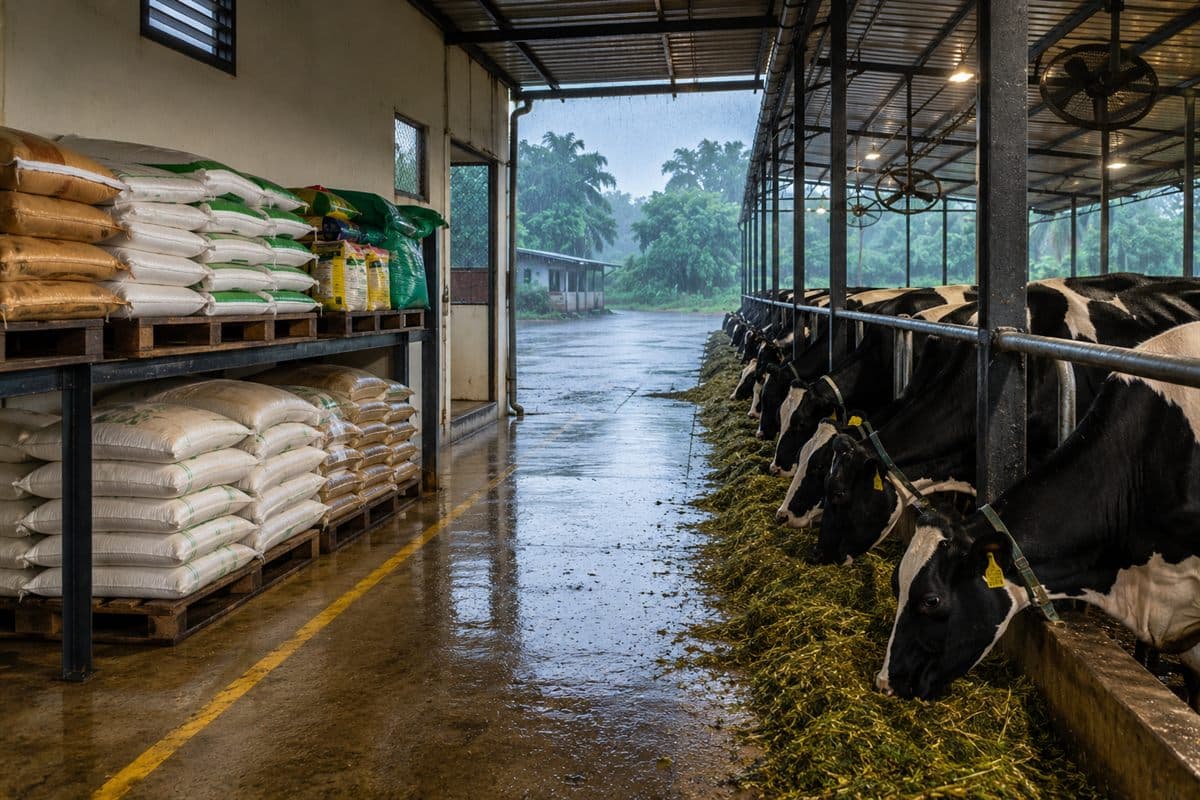
Monsoon Dairy Management: Protect Cattle, Feed & Milk Yield
Monsoon dairy management for Indian farmers — feed mould and aflatoxin control, mastitis prevention, hoof care, and a pre-monsoon checklist.
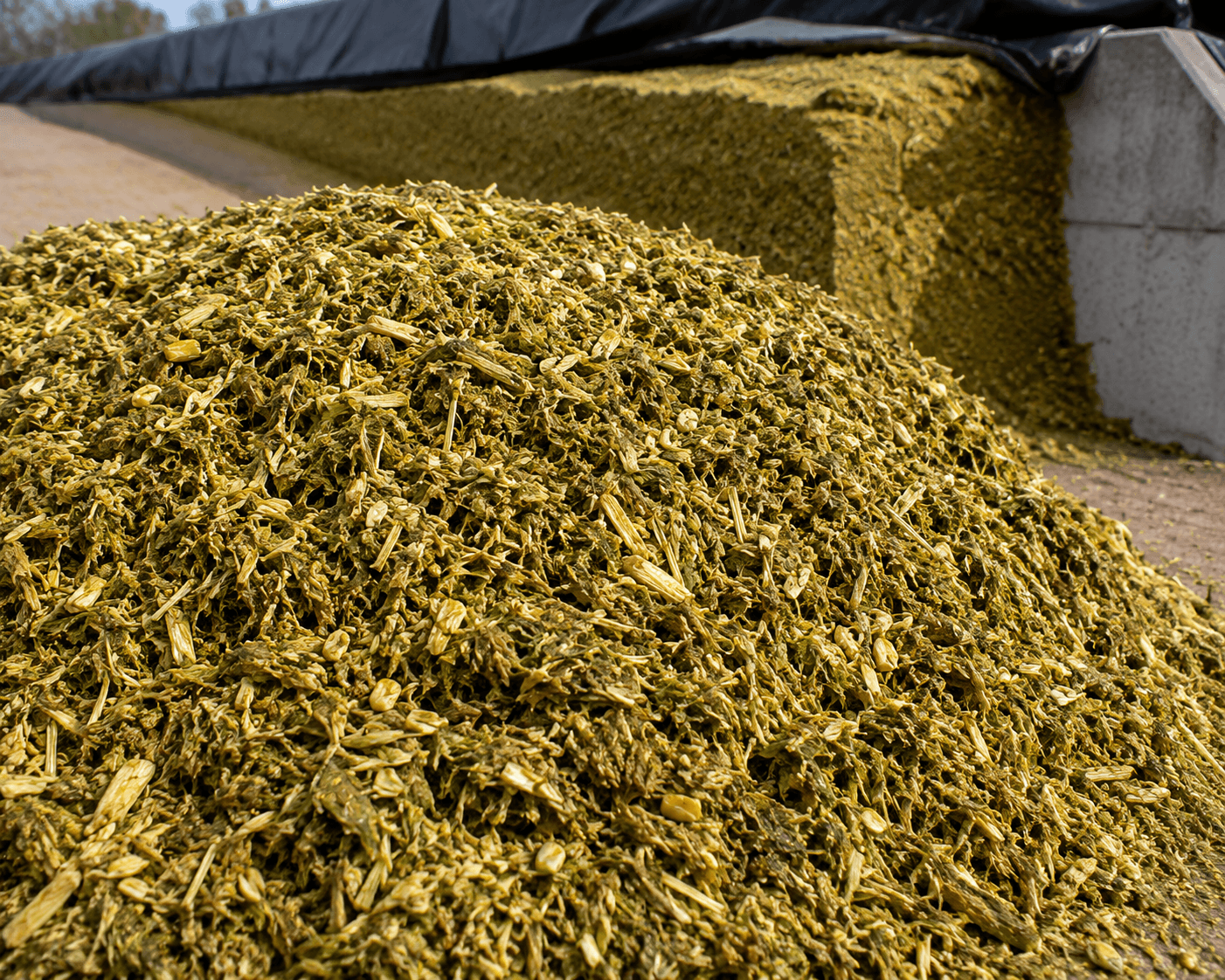
Silage Making for Cattle: Complete Guide
Complete silage making guide for Indian dairy — maize silage process, moisture and chop length targets, sealing, fermentation, and quality checks.
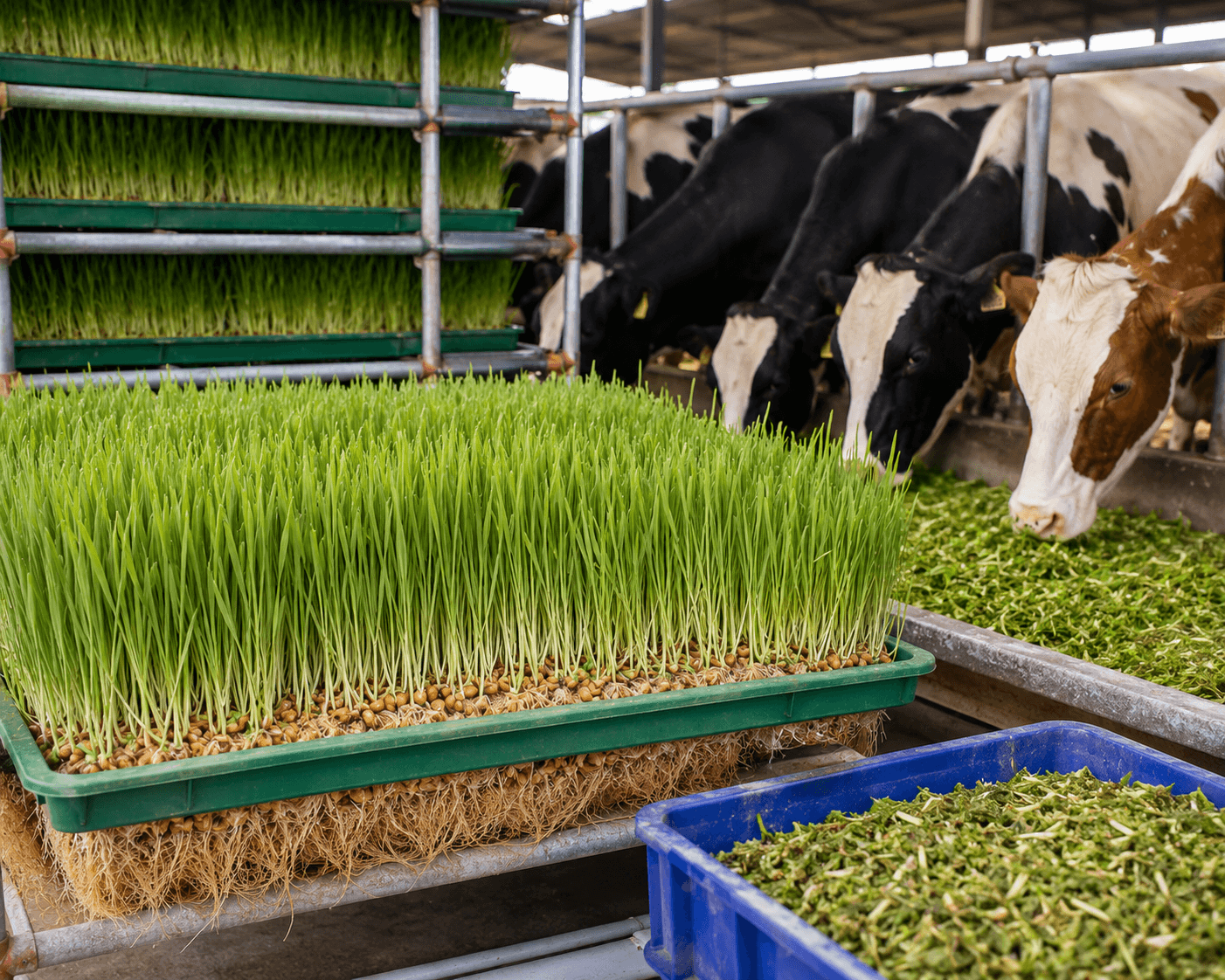
Hydroponic Green Fodder for Indian Dairy
Hydroponic green fodder for Indian dairy — grow fresh fodder from barley seeds in 7 days, setup cost, feeding rates, problems, and ROI for small farms.