Ketosis in Dairy Cattle: Causes, Detection & Prevention
By Parv Badjatiya · Published Tue Jun 30 2026 00:00:00 GMT+0000 (Coordinated Universal Time) · Updated Tue Jun 30 2026 00:00:00 GMT+0000 (Coordinated Universal Time)
The cow looks fine. Eats normally enough. Doesn't seem sick. But she's milking 2 litres a day below where she should be peaking — and she'll stay there for the rest of the lactation. That's subclinical ketosis — the silent metabolic disease that hits 10 to 30% of Indian fresh cows in the first 60 days post-calving and quietly destroys herd economics.
This guide covers what ketosis actually is (the biochemistry simplified), how to detect it (visible AND invisible cases), how to treat it when it happens, and — most importantly — how to prevent it through transition-cow nutrition management.
What ketosis actually is
Ketosis is a metabolic disorder — not an infection. It strikes dairy cows and buffaloes in early lactation, typically peaking 3 to 6 weeks after calving when milk yield is climbing but feed intake hasn't caught up.
The mechanism, simplified:
- The cow's energy demand spikes at peak lactation. A high-yielding cow producing 20+ L/day needs enormous energy — far more than even the best-formulated ration can deliver in the limited intake of early lactation.
- She can't eat enough to cover the gap. Dry matter intake in early lactation is constrained by uterine recovery, hormonal changes, and physical rumen capacity.
- Her body breaks down stored fat to cover the energy shortfall. This releases non-esterified fatty acids (NEFAs) into the blood.
- The liver tries to process the NEFAs — converting them either to usable energy (full oxidation) or to ketone bodies (partial oxidation).
- When NEFA load exceeds the liver's capacity, ketone bodies build up: beta-hydroxybutyrate (BHB), acetoacetate, and acetone.
- Elevated blood BHB = ketosis. The threshold is 1.2 mmol/L for subclinical, 3.0 mmol/L for clinical.
This whole chain is called negative energy balance (NEB). Every fresh cow goes through some NEB — that's normal physiology. The problem is when NEB is so severe or so prolonged that ketone bodies overwhelm the system.
Two types: clinical vs subclinical
This distinction matters because they need different responses.
- Blood BHB above 3.0 mmol/L
- Cow off feed, especially refuses concentrate
- Milk yield drops 5–10 L/day over 2–4 days
- Body weight drops rapidly (1–2 kg/day)
- Dung firm, dry, dark
- Sweet acetone smell on breath (like nail polish remover) — diagnostic
- Rare neurological form: cow circles, head-presses, licks walls, appears blind
- Drops in body condition score visibly within 2 weeks
- Treatment urgent — call vet
- Blood BHB between 1.2 and 3.0 mmol/L
- No visible symptoms — cow appears normal
- Milk yield 5–15% below potential (not catastrophic, just sub-optimal)
- May reach lower peak yield than expected
- Higher risk of mastitis, displaced abomasum, retained placenta
- Poorer reproductive performance — longer days-open
- 40–60% of affected cows go undetected without BHB testing
- The bigger economic problem at the herd level
- "Catch it early" is the entire game
Severe clinical ketosis can progress to "nervous ketosis" within 24–48 hours. The cow circles, head-presses against walls, licks objects compulsively, appears blind, may stagger or fall. This is a metabolic emergency. IV dextrose plus glucocorticoid + supportive care is the standard treatment — not something to attempt without veterinary supervision. Without treatment, severe ketosis can lead to coma and death within 3–5 days.
Blood BHB — the single most useful number
BHB (beta-hydroxybutyrate) is the dominant ketone body in cattle blood. A simple handheld meter — like the Precision Xtra used for human diabetes patients — measures it from a single drop of tail-vein blood. Cost: ₹4,000–8,000 for the meter, ₹80–150 per BHB test strip.
BHB thresholds and what each means
Interpretation:
| Blood BHB (mmol/L) | Status | What to do |
|---|---|---|
| Under 1.2 | Healthy | No action |
| 1.2 to 1.4 | Borderline / very mild subclinical | Improve transition feeding; recheck in 5 days |
| 1.4 to 3.0 | Subclinical ketosis | Start oral propylene glycol; investigate herd-level transition feeding |
| Above 3.0 | Clinical ketosis | Veterinary treatment; IV dextrose + propylene glycol |
| Above 6.0 | Severe / nervous form | Veterinary emergency |
The herd-level test that matters most: in the first 21 days post-calving, test BHB on every fresh cow once at day 7 and once at day 14. Catching subclinical cases at day 7 and treating immediately prevents most of the chain reaction (mastitis spike, displaced abomasum, slow yield ramp).
Why ketosis happens — risk factors
The cause is always negative energy balance, but several conditions amplify the risk.
Over-conditioning at calving (the biggest risk factor)
A cow that calves at BCS above 3.75 has too much body fat. Two problems:
- Her intake recovers slower post-calving — fat cows eat less in early lactation
- Her fat reserves mobilise more aggressively when she goes into NEB
Result: NEFAs flood the liver, ketone bodies build up fast. Over-conditioned cows have 3–5× higher ketosis rates than properly-conditioned cows. The single biggest preventable risk factor is over-feeding during the dry period — see dry cow management.
High milk yield genetics
Crossbred HF, Jersey, and high-yielding Murrah buffalo are more prone because their genetic milk yield potential outstrips their intake capacity in early lactation. This is biology, not a defect — but it means high-yield herds need better transition-cow management, not the same as moderate-yield herds.
Twin calving and dystocia
Cows that have difficult calvings (dystocia, retained placenta, twin births) eat less for the first 7–14 days post-calving. The intake gap is larger, NEB deeper, ketosis risk much higher.
Concurrent disease
- Milk fever (see our milk fever guide) — cows recovering from milk fever have poor intake for 2–4 days, often triggering ketosis
- Mastitis (see mastitis guide) — cows with clinical mastitis are off-feed
- Subclinical acidosis (acidosis guide) — disturbs rumen function, reduces intake
Heat stress
In Indian summer, heat-stressed cows drop intake 10–25%. When this overlaps with the post-calving period, ketosis risk doubles. See heat stress in dairy cattle.
The bigger problem isn't just lower total intake — it's the shifted feeding pattern. Heat-stressed cows largely stop eating during the hot daytime hours (11 AM–4 PM) and "slug-feed" at night when temperatures drop. They consume a disproportionate share of their daily concentrate in 1–2 large nighttime meals instead of spread across the day. This uneven intake pattern triggers:
- Subclinical rumen acidosis — large concentrate meals crash rumen pH for 2–4 hours after feeding, see our acidosis guide
- Reduced microbial protein synthesis — acidic rumen produces less of the propionate that the cow's liver needs as a glucose precursor
- Compounding energy shortfall — the cow is now both undereating AND extracting less energy from what she does eat
The net result: ketosis risk in transition cows during peak Indian summer (May–June, and again post-monsoon humidity in September) can be 2–3× higher than in the cooler months. This is one of the strongest arguments for evening-and-early-morning feed delivery in summer, plus fan/sprinkler cooling and a rumen buffer (sodium bicarbonate) during heat-stress months.
Sudden ration changes
Switching feed brands or compositions at calving without a 21-day transition disturbs rumen function and intake. See the 21-day transition protocol.
Detection — three tests in order of usefulness
Blood BHB meter (gold standard)
The single most informative test for ketosis. A handheld device gives an instant reading from a drop of tail-vein blood.
- Cost: ₹4,000–8,000 for meter + ₹80–150/strip
- Accuracy: Excellent. Same technology as diabetes BHB testing.
- When to test: Any fresh cow in the first 21 days post-calving. Also any cow with unexpected yield drop, off-feed, or rapid weight loss.
- ROI: For a 20-cow herd, the meter pays back in 3–6 months from catching subclinical cases early.
Milk ketone strip
A urine-strip style test dipped into milk. Gives a colour change based on acetoacetate level.
- Cost: ₹30–50 per test
- Accuracy: Moderate. Detects most clinical cases but misses about 30% of subclinical. False positives possible.
- When to use: Herd-screening when you don't have a BHB meter, or as a quick verification at the milking parlour.
Urine ketone strip
Same strip as milk, tested on urine instead.
- Cost: ₹30–50 per test
- Accuracy: Lower. Urine ketones rise late in the disease — misses many early cases.
- When to use: Confirmatory test for clinically suspected cases. Not recommended for screening.
What about acetone breath smell?
Many traditional dairies rely on smelling for acetone on the cow's breath. This only detects late-stage clinical ketosis — by then the cow has been losing 5–15% yield for weeks already. It's not a screening tool; it's a "this cow is already in crisis" indicator.
Treatment protocol
If a fresh cow has BHB above 1.4 mmol/L, treat immediately. Don't wait for clinical signs.
- 1Oral propylene glycol — the first-line treatment
300 ml per cow per day as a drench, 3–5 days. Propylene glycol is converted to glucose in the rumen, raising blood sugar and suppressing fat mobilisation. Cheap, effective, safe to administer without veterinary supervision. The single most important ketosis treatment tool in any dairy's kit.
- 2Add a rumen buffer + live yeast
Sodium bicarbonate at 100 g/day plus live yeast at 5–10 g/day for 1 week. Stabilises rumen function, supports the cow's recovery of voluntary intake. See the acidosis guide for bicarbonate dosing.
- 3Offer the most palatable feed possible
Fresh green fodder, dry-fodder mix, mild concentrate. Don't push high-starch concentrate — that worsens rumen disruption. Keep mineral mixture and salt accessible. The goal is to get the cow eating again.
- 4IV dextrose for severe cases — vet only
500 ml of 50% dextrose IV (slow jugular drip) for cows that are down, neurological, or refusing all feed. Gives an immediate blood glucose spike. Effect lasts only 2–4 hours, so MUST be followed up with oral propylene glycol. Improperly administered IV dextrose can cause venous irritation, thrombosis, or aspiration.
- 5Glucocorticoid for severe / nervous-form cases — vet only
Dexamethasone 20–40 mg IM, one dose, under veterinary supervision. Stimulates gluconeogenesis (the cow's own glucose production) and is dramatically effective in severe cases. Trade-off: suppresses immunity for 7–10 days, raising mastitis and infection risk. Use only when needed.
- 6Recheck BHB after 5 days
Take a blood BHB reading on day 5 of treatment. Above 1.2 mmol/L → continue propylene glycol for another 3 days. Below 1.2 → discontinue treatment but monitor weekly through day 30 post-calving.
Prevention — the transition-cow nutrition plan
Treatment works, but prevention works far better. Ketosis is one of the most preventable dairy diseases because the cause is so predictable: negative energy balance triggered by transition-cow mismanagement.
1. Body Condition Score (BCS) at calving — 3.0 to 3.5
The single biggest preventive lever. Walk your dry cows weekly and assess BCS:
| BCS | What you see / feel | Ketosis risk |
|---|---|---|
| 2.5 (thin) | Hip bones and ribs visible, tail head bony | Moderate — no reserves to draw on |
| 3.0–3.5 (ideal) | Bones felt under firm pressure, smooth body lines | Lowest |
| 4.0 (fat) | Bones hard to feel, tail head has fat pad | High |
| 4.5+ (over-fat) | Cannot feel hip bones, fat rolls around tail | Very high — 3–5× normal |
If you have over-conditioned dry cows, reduce concentrate immediately — bring them down to BCS 3.5 by calving day. Don't try to fatten thin cows in the close-up period either; energy supplementation that late goes to belly fat, not body reserves.
2. Two-phase dry period feeding
- Far-off dry period (day 1–40): Low-energy maintenance ration. Lots of fibrous forage, 1.5–2 kg compound feed, mineral mix. Goal: maintain BCS, support fetal growth.
- Close-up dry period (last 21 days): Step up concentrate to 2–3 kg/day. Goal: prepare rumen for lactation diet, slowly increase intake capacity.
Don't over-feed concentrate in the far-off period — that's where over-conditioning happens. See full protocol in our dry cow management guide.
3. Smooth post-calving feed-up
A cow at peak lactation needs 6–10 kg of concentrate. But jumping from 2 kg (dry period) to 8 kg (lactation) at calving day causes acidosis and digestive shutdown.
Right approach:
- Day 0–7: 3 kg concentrate (calving + early)
- Day 7–14: 5 kg
- Day 14–21: 6–7 kg
- Day 21+: peak feeding for the cow's yield level (8–11 kg for high-yielders)
4. Bypass fat for high-yielders
For cows producing 15+ L/day, bypass fat at 100–200 g/day from day 21 to day 100 reduces the depth of negative energy balance. Bypass fat delivers concentrated energy past the rumen — directly absorbed in the small intestine — without disturbing rumen fermentation.
ROI: 50–70% reduction in ketosis incidence in high-yield herds. The cost (₹30–50/cow/day) is small relative to the prevented yield loss.
5. Live yeast and rumen support
A culture of Saccharomyces cerevisiae at 5–10 g/day during the transition period (3 weeks pre-calving through 6 weeks post-calving) stabilises rumen fermentation, supports voluntary intake, and reduces subclinical acidosis. Recent Indian trials show ~30% reduction in subclinical ketosis with yeast supplementation in well-managed herds.
6. Avoid concurrent risk factors
- Treat milk fever promptly — recovering milk-fever cows have poor intake
- Manage heat stress in summer
- Use 21-day feed transitions when changing rations
- Manage mastitis — off-feed cows develop ketosis
The ketosis cascade — how it spreads to other problems
Ketosis rarely stays a single problem. It triggers a cascade that affects most of the cow's transition health:
| Condition | How ketosis triggers it |
|---|---|
| Mastitis | Ketones suppress neutrophil function — immune cells can't fight udder bacteria |
| Displaced abomasum (DA) | Reduced rumen motility from low intake; abomasum can shift to the left, requires surgery |
| Retained placenta | Same intake/immune-suppression mechanism |
| Metritis (uterine infection) | Compromised immunity post-calving |
| Fertility loss | Energy-deficient cows don't ovulate properly; longer days-open |
| Fatty liver syndrome | Excess NEFAs deposit as triglycerides in the liver — sometimes irreversible |
| Lower next-lactation yield | Carries through to the entire production cycle |
This is why catching ketosis early matters so much — a single fresh cow with subclinical ketosis is at sharply higher risk for 4–5 other transition diseases over the next 60 days.
Economic cost
Per affected cow per lactation, ketosis costs an Indian dairy:
| Cost component | Range (₹ per cow per lactation) |
|---|---|
| 5–15% milk yield loss over 4–8 weeks (4 L/day × 50 days × ₹35/L) | 5,000–12,000 |
| Longer calving interval / reduced fertility | 2,000–5,000 |
| Increased mastitis and DA risk | 1,500–5,000 |
| Veterinary fees + treatment medication | 500–2,000 |
| Premature culling in chronic cases (amortised) | 1,000–3,000 |
| Total per affected cow | ₹8,000–₹25,000 |
For a 10-cow herd with 15% subclinical ketosis prevalence (typical Indian herd without monitoring), that's ₹12,000–₹37,500 per year in invisible losses. Most farms don't see it because the cow looks normal — she's just milking 1–2 L/day below where she should be.
The prevention math is overwhelming: a ₹4,000 BHB meter + ₹50 per fresh-cow test + ₹500 in propylene glycol per case typically saves ₹15,000+ per affected cow. ROI is in months, not years.
Common myths
| Myth | Reality |
|---|---|
| "Only fat cows get ketosis." | Over-conditioning is the biggest risk factor, but normal-BCS high-yielders also get it during the early-lactation NEB period. |
| "If the cow's eating, she doesn't have ketosis." | Subclinical ketosis (40–60% of cases) shows no visible signs — appetite can look normal. |
| "Ketosis is rare in Indian dairy." | Surveys consistently find 10–30% subclinical prevalence. It just goes undetected because nobody measures BHB. |
| "Buffalo don't get ketosis." | High-yielding Murrah and Mehsana buffalo absolutely get ketosis. Mechanism is identical. |
| "Treat with sugar / molasses." | Oral molasses or sugar gives a brief glucose spike but no sustained effect. Propylene glycol is the right drug — its effect lasts 12+ hours. |
| "It's a winter disease." | Peak risk is post-calving regardless of season. Heat stress in summer makes it WORSE not better. |
A starter ketosis monitoring programme
If you've never measured BHB before, here's the 30-day rollout to start:
- Week 1: Order a Precision Xtra meter and 50 BHB strips. Order 5 L of propylene glycol. Train the milker on tail-vein blood collection (a vet visit demonstrates this in 15 minutes).
- Week 2: Start testing every fresh cow at day 7 post-calving. Record the BHB reading.
- Week 3: Add a day-14 re-test for any cow whose day-7 reading was 1.0+ mmol/L.
- Week 4: For any cow with BHB above 1.4, start oral propylene glycol per the treatment protocol above.
After 90 days you'll know your herd's ketosis prevalence. Most farms are surprised — typical first-time readings show 15–25% subclinical prevalence in fresh cows, and treating those cases captures the easiest 1–2 L/day per affected cow.
Putting it all together
Ketosis is the most preventable major transition disease in dairy cattle. The cause is predictable (negative energy balance), the diagnostic test is cheap and fast (BHB meter), the treatment is simple and safe (oral propylene glycol), and the prevention is well-understood (BCS management + transition-cow nutrition).
The biggest barrier is that most herds don't measure BHB — so the subclinical cases are invisible, even though they're costing ₹8,000–₹25,000 per affected cow per lactation. Once you start measuring, the picture changes fast: 15–30% of cows test positive, half of those would have been missed without the meter, and the catch-rate compounds across every fresh cow.
For a high-yield dairy operation, a BHB meter pays for itself in 3–6 months. For a smallholder dairy with 5–10 cows, it pays for itself within one lactation cycle. The investment is small. The return is large.
Related resources on cattlefeed.info
- Ration formulation — use the DCP and TDN calculator to balance energy and protein in early-lactation rations
- Daily feed cost — the daily price tracker helps cost out ketosis prevention against day-by-day ingredient prices
- Companion disease guides — milk fever and mastitis complete the transition-cow disease triad — ketosis interacts with both
- The prevention foundation — dry cow management is where 90% of ketosis prevention actually happens
- For high-yielders — bypass fat at peak lactation and mineral mixture for transition support
Further reading and sources
The content in this guide draws on the following authoritative sources. Where specific numbers are quoted (BHB thresholds, treatment dosing, prevalence in India), they reflect the consensus from these organisations.
- Merck Veterinary Manual — clinical signs, treatment protocols, IV dextrose and glucocorticoid dosing, disease pathophysiology. merckvetmanual.com
- Indian Council of Agricultural Research (ICAR) — Indian dairy ketosis prevalence studies, transition cow management research from NDRI Karnal and other institutes. icar.org.in
- National Dairy Development Board (NDDB) — body condition scoring guidance, transition cow feeding protocols, and the mineral mixture composition referenced in the prevention section.
- National Mastitis Council (NMC) — links between ketosis and mastitis incidence, immune-suppression mechanism. nmconline.org
- Indian Veterinary Research Institute (IVRI) — Indian dairy disease incidence data, treatment protocols adapted for Indian conditions.
- Dairy NZ / Dairy Cattle Welfare Council — BCS scoring system originally developed in New Zealand and now used globally; the 1–5 scale referenced in this article is the NZ system.
For decisions on individual animals — BHB interpretation, IV therapy, glucocorticoid use — always work with a qualified veterinarian. This article is general educational content; it is not a substitute for veterinary diagnosis. See our disclaimer for the full editorial position on veterinary content.
Frequently asked questions
What is ketosis in dairy cattle?+
What are the symptoms of clinical ketosis?+
What is the difference between clinical and subclinical ketosis?+
How is ketosis diagnosed?+
How is ketosis treated?+
How can ketosis be prevented?+
What is the economic cost of ketosis?+
Related articles
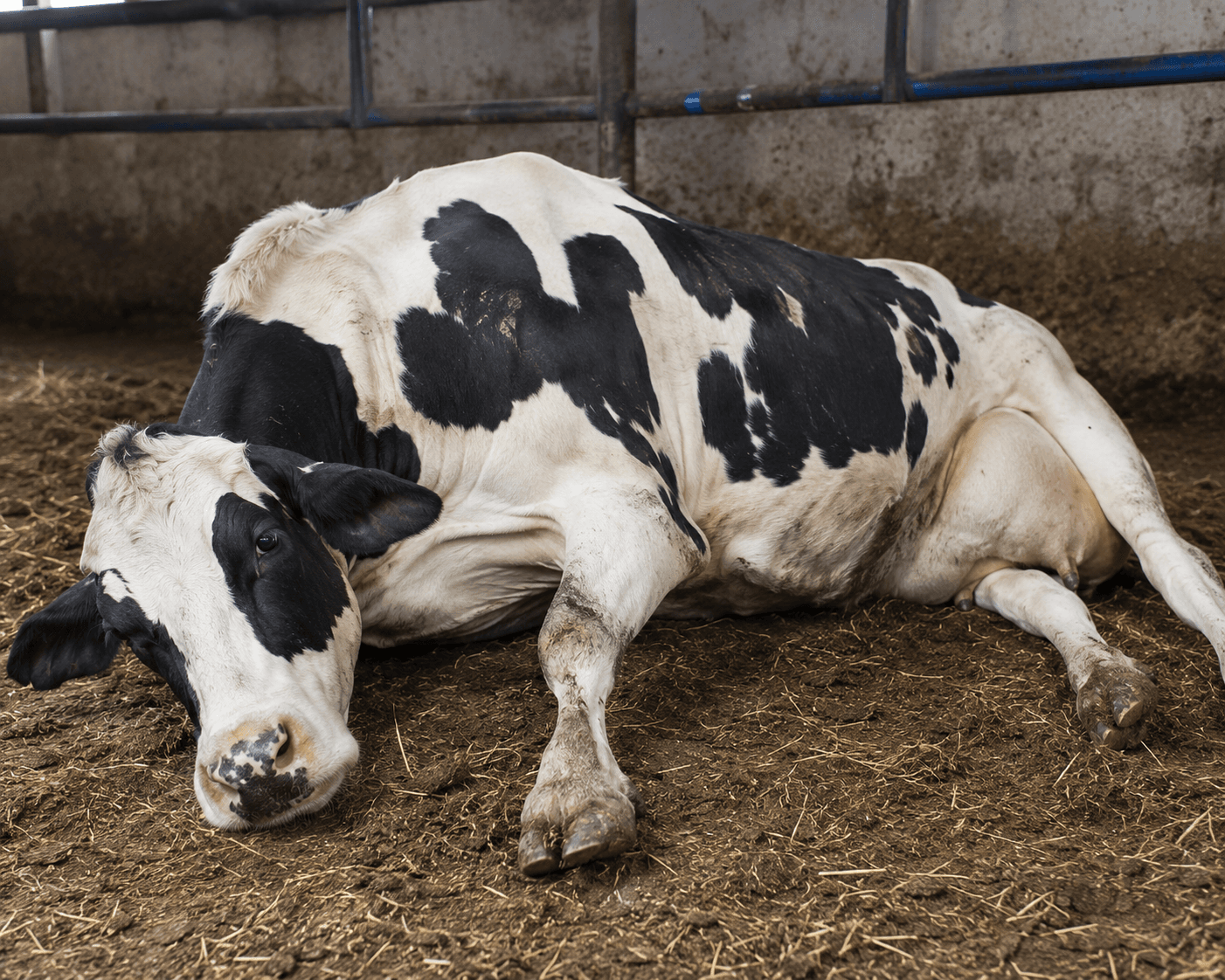
Milk Fever (Hypocalcaemia) in Dairy Cattle: Causes, Treatment & Prevention
Milk fever in cows and buffaloes — symptoms in the first 72 hours after calving, three stages, IV calcium treatment, and dry-period prevention protocol.
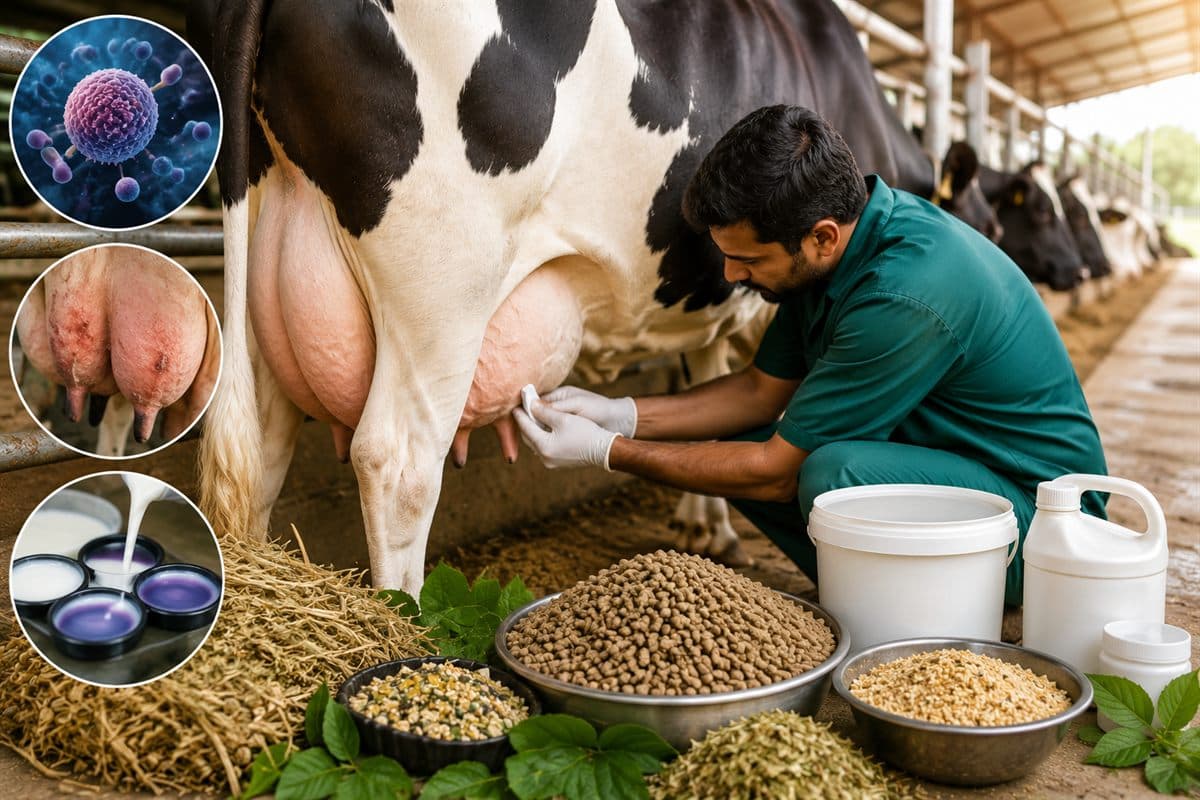
Mastitis in Dairy Cattle: Prevention, Detection & Treatment
Mastitis in Indian dairy cattle — clinical vs subclinical, SCC thresholds, NMC 5-point prevention, dry cow therapy, treatment, and the economic cost.
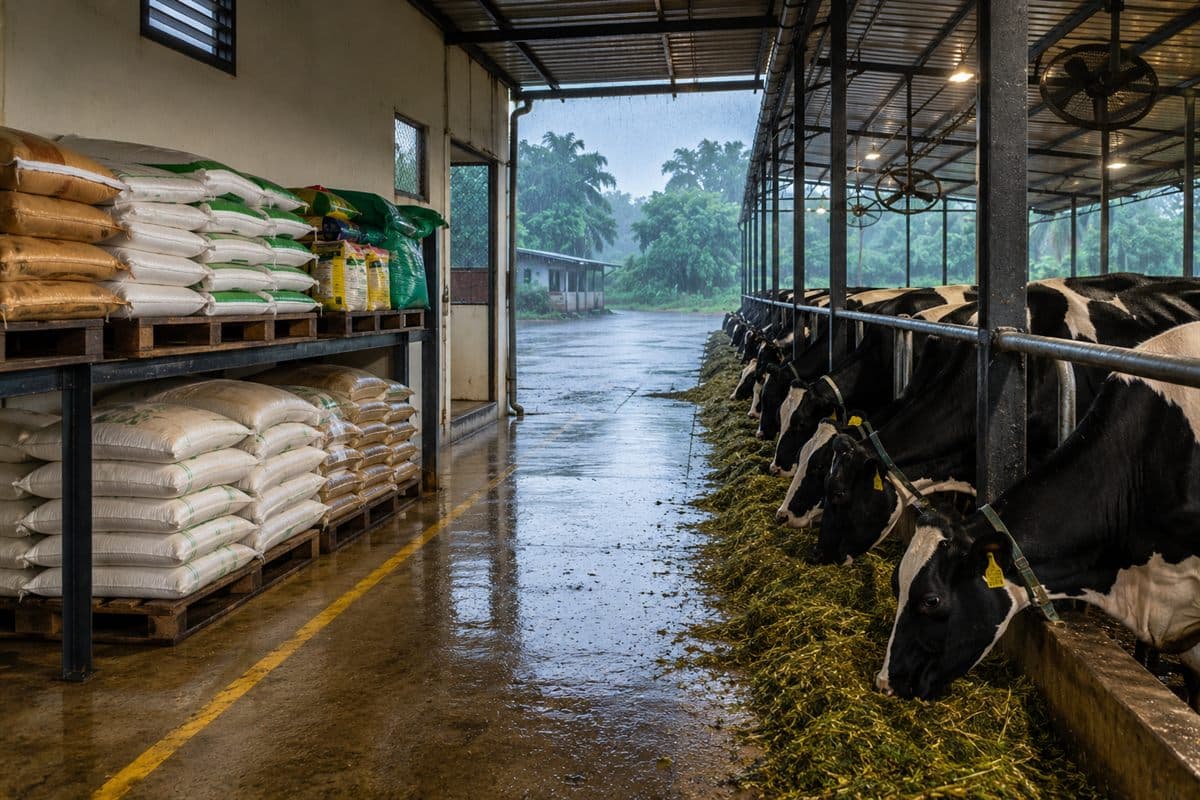
Monsoon Dairy Management: Protect Cattle, Feed & Milk Yield
Monsoon dairy management for Indian farmers — feed mould and aflatoxin control, mastitis prevention, hoof care, and a pre-monsoon checklist.