Camel Feeding & Nutrition
Camels (Camelus dromedarius — the single-humped dromedary) are India's most desert-adapted livestock species, with a national population of roughly 2.5 lakh animals concentrated almost entirely in Rajasthan, Gujarat, and adjoining Haryana. The camel population has been declining for decades as motorised transport replaced their draught role, but camel milk is now emerging as a premium niche product — sold at ₹150–300/litre for its claimed benefits in diabetes management, low lactose content, and high vitamin C content compared to cow milk.
How camel nutrition is fundamentally different
Camels evolved as desert specialists, with several digestive and metabolic adaptations that change feeding strategy:
- Highly efficient digestion of poor-quality forage — camels can extract usable nutrition from coarse, thorny, dry, and woody material that cattle and buffalo cannot use at all
- Three-chambered stomach (not a true four-compartment ruminant) — slightly different fermentation pattern but similar dietary principles apply
- Exceptional water economy — camels can lose 25–30% of body water without dying (cattle die at 12% loss); they can also drink 100+ litres in a single session to rehydrate
- No tolerance for urea or other NPN — camels lack the urea-cycling efficiency of true ruminants; urea-containing feed is dangerous
- Lower energy requirement per kg of body weight than cattle — desert metabolism is conservative
- Very long lactation — a camel can lactate for 12–18 months continuously, vs cattle's typical 10 months
- Slow reproduction — single calf per pregnancy, 13–14 month gestation, breeding only every 2 years in most management systems
These features mean that camels respond very differently to concentrate feeding than cattle do. A camel pushed on high-concentrate dairy-style feeding often develops digestive problems instead of producing more milk — they evolved on fibrous browse, not grain.
Indian camel breeds
| Breed | Region | Primary use | Notes |
|---|---|---|---|
| Bikaneri | Bikaner, Rajasthan | Draught + milk | Largest, heaviest Indian breed |
| Jaisalmeri | Jaisalmer, Rajasthan | Racing + draught | Tallest, fastest |
| Kachhi (Kutchi) | Kutch, Gujarat | Milk + meat | Best milk yielder among Indian breeds |
| Mewari | Udaipur region | Hill terrain + draught | Smaller, agile |
| Marwari | Marwar region | Draught + light load | General-purpose desert breed |
For commercial camel milk production (a niche but growing segment), Kachhi is the leading dairy breed with sustained yields of 3-5 L/day; some lines push to 8-10 L/day under good management.
Feeding system: browse + supplementation
Traditional Indian camel feeding is browse-dominant:
- Browse on thorny desert shrubs — khejri (Prosopis cineraria), ber (Ziziphus), kair (Capparis), neem, acacia — provides 60–70% of nutrition
- Dry fodder (wheat or paddy straw, jowar kadbi) for bulk
- Concentrate supplementation at 1–2 kg/day for working camels, 3–5 kg/day for lactating camels
- Salt blocks continuously available (camels need more salt than cattle for water economy)
- Mineral mixture specifically formulated for camels where available, otherwise standard cattle mineral mixture (no urea)
- Water in summer: daily or every other day, 30–80 L per drinking session
A simple concentrate mix for lactating camels: maize or jowar grain 35-40%, groundnut cake 20-25%, wheat bran 30-35%, mineral mixture 2%, salt 1-2%. No bypass fat needed (low energy demand), no urea ever.
Our dedicated camel feeding guide covers Rajasthan and Kutch-specific practical advice.
Camel milk — the emerging opportunity
Camel milk has become a viable commercial product in India over the past decade, driven by:
- Claimed diabetes management benefits — small published trials suggest improved glycaemic control
- Lower lactose than cow milk (around 4.4% vs 4.7%) — easier on lactose-intolerant consumers
- Higher vitamin C content
- Premium pricing — ₹150–300/litre at farm gate; ₹400–800/litre at retail
- Established cooperatives — Rajasthan's RCDF/Saras and Gujarat's Amul both run camel milk procurement
For a Kachhi or Bikaneri camel yielding 5 L/day at ₹200/L, the economics are competitive with high-yield buffalo dairying when you factor in lower feed cost (camels eat browse, not concentrate-heavy rations) and lower veterinary spend (camels are remarkably disease-resistant).
Stage-specific feeding
- Calf (0–12 months) — milk from dam; gradually introduce green browse and small grain from month 3
- Growing camel (1–4 years) — building structural growth; moderate concentrate, ample browse
- Lactating camel — increase concentrate by 50–100% over maintenance; salt and water access critical
- Adult / working camel — depending on workload, 1–3 kg concentrate/day plus browse
- Pregnant camel (last 3 months) — supporting fetal growth + maintaining body condition for the long lactation ahead
Common camel feeding mistakes
- Treating camels like cattle — pushing high-concentrate dairy rations causes acidosis and reduced milk yield
- Feeding urea — even in small amounts, it can be toxic
- Inadequate salt — desert metabolism needs more salt than cattle; deficiency causes fertility problems
- Ignoring browse access — confining camels to dry-fodder-only rations damages digestive health over time
- Skipping summer water — even with their famous tolerance, denial of water for more than 2-3 days in 45°C heat is harmful
Articles for camel feeding
The article cards below cover camel nutrition by life stage. For ingredient depth, see our raw materials and supplements sections. Daily wholesale prices on the 21 feed commodities are on the prices dashboard.
Calf
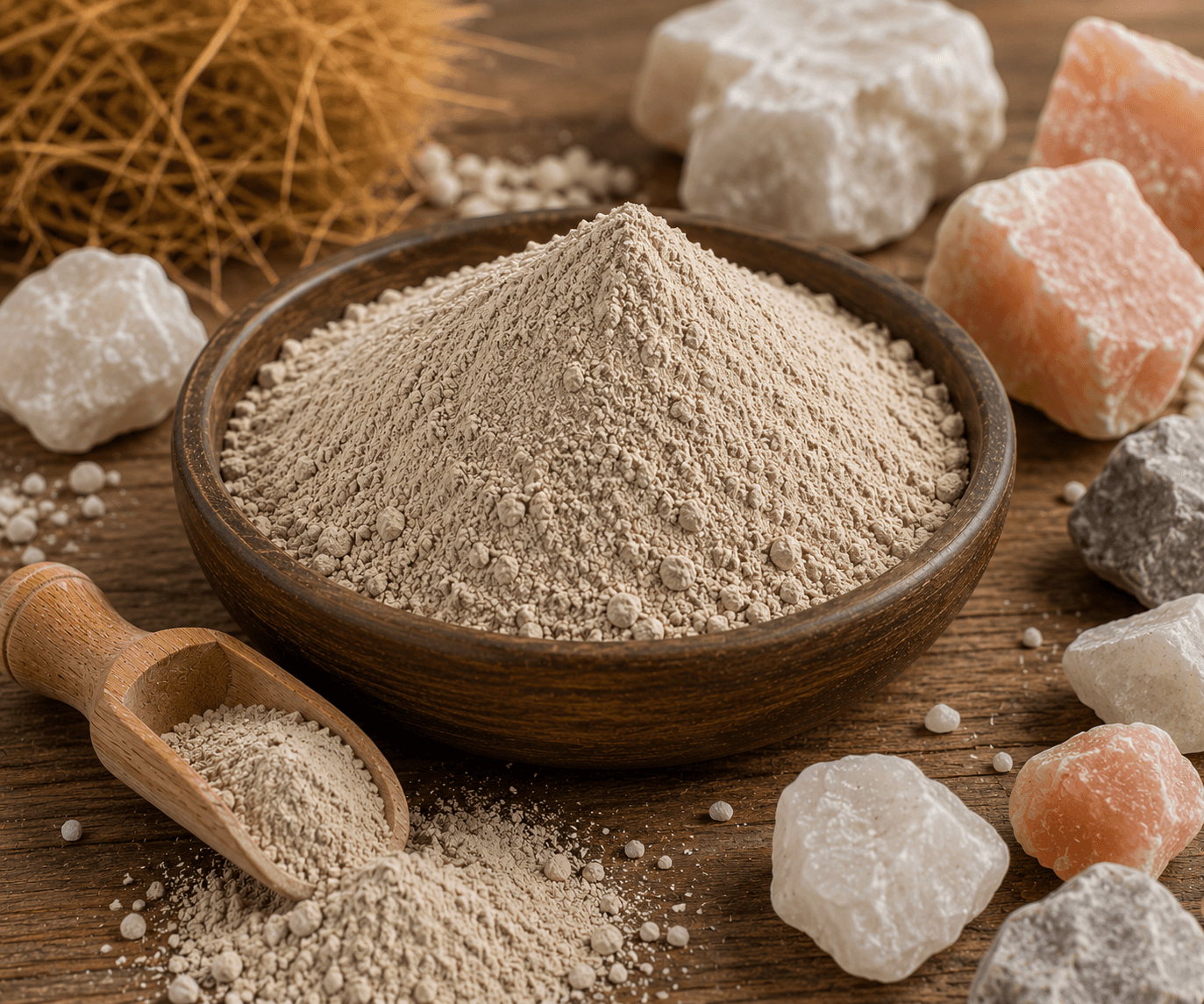
Mineral Mixture for Cattle Feed
Mineral mixture for Indian dairy — NDDB-prescribed formulation, role of each mineral, daily dose for milch animals and calves, and quality checks.
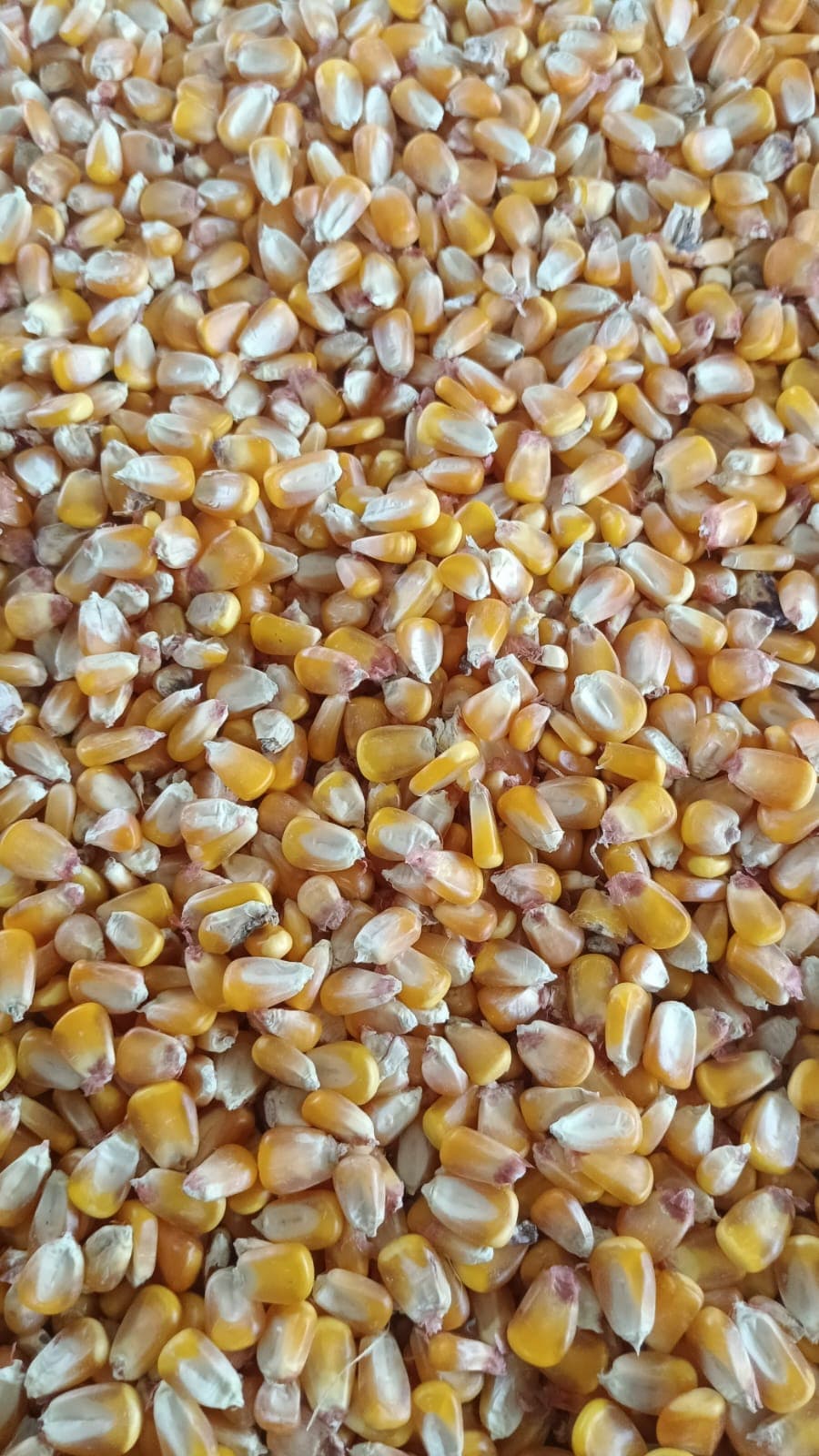
Maize as Cattle Feed
Maize in Indian cattle feed — protein and starch profile, the 10–35% inclusion rate, moisture and aflatoxin limits, acidosis prevention, and storage.
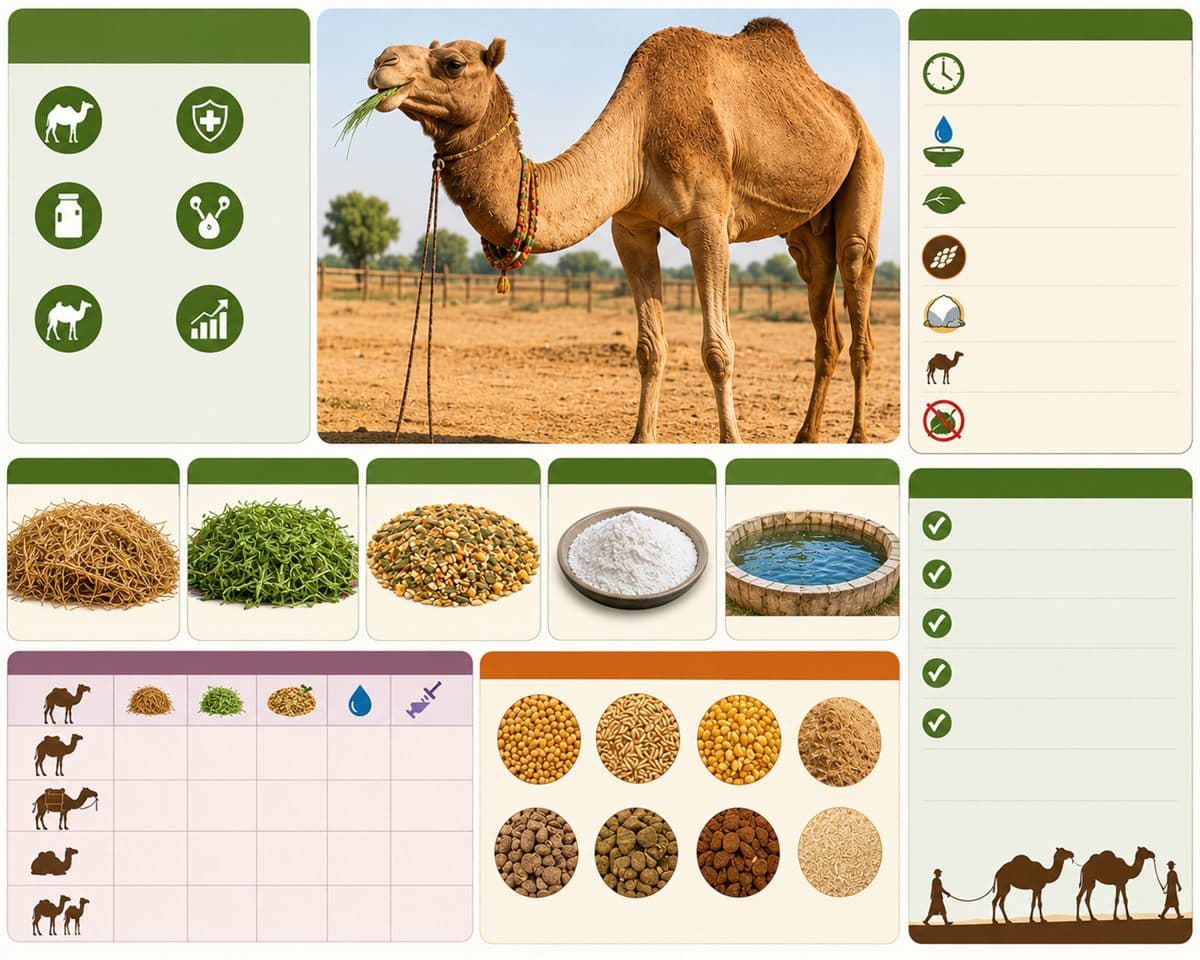
Camel Feeding Guide for Indian Camel Owners
Feeding camels in India — daily green fodder, dry fodder, concentrate amounts, salt and minerals, plus what Rajasthan and Kutch camels eat for milk.
Lactating
Mineral Mixture for Cattle Feed
Mineral mixture for Indian dairy — NDDB-prescribed formulation, role of each mineral, daily dose for milch animals and calves, and quality checks.
Maize as Cattle Feed
Maize in Indian cattle feed — protein and starch profile, the 10–35% inclusion rate, moisture and aflatoxin limits, acidosis prevention, and storage.
Camel Feeding Guide for Indian Camel Owners
Feeding camels in India — daily green fodder, dry fodder, concentrate amounts, salt and minerals, plus what Rajasthan and Kutch camels eat for milk.
Adult
Mineral Mixture for Cattle Feed
Mineral mixture for Indian dairy — NDDB-prescribed formulation, role of each mineral, daily dose for milch animals and calves, and quality checks.
Camel Feeding Guide for Indian Camel Owners
Feeding camels in India — daily green fodder, dry fodder, concentrate amounts, salt and minerals, plus what Rajasthan and Kutch camels eat for milk.